top of page
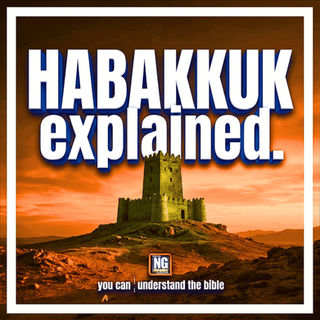
Habakkuk Explained sermon series

The Book Of Habakkuk

What Is The Book Of Habakkuk About?

Last updated: June 2026

Habakkuk is the book of a prophet who argues with God — and a God who answers. Written near the end of the seventh century BC, as Judah's moral fabric was unravelling and Babylon's shadow was lengthening on the horizon, Habakkuk does something almost no other prophet does: he does not primarily address Israel. He addresses God directly, with complaints, demands, and anguished questions. Why does evil go unpunished? How can a holy God use a wicked nation to judge His own people?

The answers Habakkuk receives do not dissolve the tension — they deepen it, and then resolve it in a way that has shaped the theology of the entire Bible. The central declaration of this book — "the just shall live by his faith" (Habakkuk 2:4, NKJV) — is quoted three times in the New Testament, in Romans, Galatians, and Hebrews, making it one of the most theologically generative sentences in the Old Testament. For the Reformed tradition, Habakkuk is not a minor prophet. It is a compressed treatise on divine sovereignty, the suffering of the righteous, and the nature of saving faith.

The book moves in three distinct movements. In chapters 1 and 2, a dialogue unfolds between Habakkuk and the LORD — the prophet complains, God responds, the prophet complains again, and God responds again with the five woes of judgment against Babylon. By chapter 3, the prophet's posture has completely transformed: he offers a psalm of breathtaking beauty and confidence, declaring that even if every earthly comfort is stripped away, he will rejoice in the God of his salvation. That arc — from raw doubt to triumphant faith — is the heart of Habakkuk, and it speaks directly to every believer who has ever looked at this broken world and asked, "Lord, how long?"

Who Wrote The Book Of Habakkuk?

Authored by the prophet Habakkuk, whose name is often understood to mean "one who embraces" or "wrestler" — a fitting description of a man who wrestles tenaciously with God over the problem of evil and divine justice. Virtually nothing is known about Habakkuk outside of this book. He is identified simply as "the prophet" (Habakkuk 1:1, NKJV), a title used of only a handful of writing prophets, suggesting he held an officially recognized prophetic office in Judah.

The book was almost certainly written in the late seventh century BC, most likely during the reign of Jehoiakim (609–598 BC). The internal evidence points clearly to a period before the Babylonian invasion of Judah — the Chaldeans are described as a rising threat about to be unleashed (Habakkuk 1:6), not a completed judgment. This places the book squarely in the generation before the fall of Jerusalem in 586 BC, one of the most turbulent periods in Israel's history. The battle of Carchemish in 605 BC, where Nebuchadnezzar routed Egypt and established Babylonian supremacy, likely fell within the prophet's lifetime.

Habakkuk occupies a unique canonical position. Unlike most prophets who deliver oracles to Israel or the nations, Habakkuk carries on a direct dialogue with God, structured almost as a legal dispute — a rib in Hebrew — in which the prophet presents his case before the divine court. Chapter 3 is explicitly designated "a prayer of Habakkuk the prophet" set to music, with the superscription "on Shigionoth" (Habakkuk 3:1, NKJV) pointing to a musical term associated with lament psalms. The closing notation — "for the Chief Musician, with my stringed instruments" (Habakkuk 3:19, NKJV) — confirms the book's liturgical use in Israel's temple worship.

Primary Theological Themes

The Sovereignty of God Over History

The dominant theme of Habakkuk is God's absolute sovereignty over nations and history, including the use of wicked nations as instruments of His purpose. When Habakkuk protests that evil goes unpunished in Judah, God's answer shocks him: He is raising up the Babylonians as His rod of judgment (Habakkuk 1:5–11). The Westminster Confession of Faith addresses this directly in Chapter V: God "doth uphold, direct, dispose, and govern all creatures, actions, and things, from the greatest even to the least" — including the acts of sinful men and nations, without Himself being the author or approver of sin (WCF 5.4). Habakkuk's second complaint presses the logical problem harder: if God is holy, how can He use a nation more sinful than Judah to punish Judah? God's answer in chapter 2 is decisive — the Babylonians will themselves be judged through the five woes of Habakkuk 2:6–20. No instrument of divine judgment escapes accountability. "But the LORD is in His holy temple. Let all the earth keep silence before Him" (Habakkuk 2:20, NKJV).

The Just Shall Live By Faith

The theological heart of the book is Habakkuk 2:4: "Behold the proud, his soul is not upright in him; but the just shall live by his faith" (NKJV). This single verse becomes the hinge of New Testament soteriology. Paul quotes it in Romans 1:17 to ground his exposition of the righteousness of God revealed through faith; in Galatians 3:11 to establish that justification is by faith and not by works of the law; and the author of Hebrews quotes it in Hebrews 10:38 to exhort believers to persevering faith under persecution. The Reformed tradition understands this verse as the Old Testament foundation for the doctrine of justification by faith alone — sola fide. It was Martin Luther's rediscovery of this verse in Romans that ignited the Reformation. What Habakkuk experienced as a resolution to personal anguish, Paul recognized as the very structure of the gospel: the righteousness of God is revealed from faith to faith.

Theodicy: The Problem of Evil in the Believer's Experience

Habakkuk opens the Bible's most direct engagement with the problem of evil from a believer's perspective. The prophet is not an atheist raising theoretical objections — he is a covenant man, saturated in Scripture, crying out to a God he believes in but does not currently understand. "O LORD, how long shall I cry, and You will not hear? Even cry out to You, 'Violence!' and You will not save" (Habakkuk 1:2, NKJV). The Reformed tradition, following the canon of biblical lament — the Psalms, Job, Lamentations, and Habakkuk — has never demanded that believers suppress such questions. What Habakkuk models is not the suppression of doubt but its proper direction: toward God, in honest prayer, from a posture of expectant waiting. "I will stand my watch and set myself on the rampart, and watch to see what He will say to me, and what I will answer when I am corrected" (Habakkuk 2:1, NKJV).

Worship as the Resolution of Doubt

The book's resolution in chapter 3 is one of the most theologically significant movements in all prophetic literature. Having received God's answer — not a fully satisfying intellectual resolution, but a sovereign declaration — Habakkuk's response is not more argument. It is worship. The theophanic psalm of chapter 3 recalls God's mighty acts of redemption from Israel's past (the Exodus, the conquest) and projects them forward as the basis for present trust. The God who parted the Red Sea is the same God now raising up Babylon. The climax is staggering in its confession: "Though the fig tree may not blossom, nor fruit be on the vines; though the labor of the olive may fail, and the fields yield no food; though the flock may be cut off from the fold, and there be no herd in the stalls — yet I will rejoice in the LORD, I will joy in the God of my salvation. The LORD God is my strength; He will make my feet like deer's feet, and He will make me walk on my high hills" (Habakkuk 3:17–19, NKJV). This is not triumphalism. It is the chief end of man — glorifying God and enjoying Him forever — expressed in the absolute worst of earthly circumstances.

Westminster Confession Connections

Habakkuk is a short book with unusually dense connections to the Westminster Standards, touching some of the most foundational doctrines in the Reformed confessional tradition.

Divine Providence (WCF 5.4) — God's governance extends to the sinful acts of nations, "not by a bare permission, but such as hath joined with it a most wise and powerful bounding, and otherwise ordering and governing of them, in a manifold dispensation, to His own most holy ends." God's use of wicked Babylon does not make Him the author of their wickedness — He bounds and governs it for His holy purposes. Habakkuk's struggle is precisely the struggle every Reformed believer faces when providence looks inexplicable.

Justification by Faith (WCF 11.1) — Habakkuk 2:4 is the Old Testament root of the Confession's doctrine of justification: those God effectually calls He freely justifies "not for anything wrought in them, or done by them, but for Christ's sake alone; nor by imputing faith itself, the act of believing, or any other evangelical obedience to them, as their righteousness; but by imputing the obedience and satisfaction of Christ unto them, they receiving and resting on Him and His righteousness by faith." The just shall live — not by works, not by national covenant identity — but by faith alone.

Saving Faith (WCF 14.2) — Habakkuk's journey models saving faith as the Confession defines it: "accepting, receiving, and resting upon Christ alone for justification, sanctification, and eternal life, by virtue of the covenant of grace." His final psalm is not faith as certainty that all questions are answered, but faith as the soul's rest in the God of the covenant even when the present offers no visible consolation.

God's Patient Governance (WCF 2.1) — When Habakkuk asks "how long?", God's answer reveals sovereign patience, not indifference. The Confession describes God as most holy "in all His counsels, in all His works, and in all His commands." His timing is never arbitrary — it is the expression of infinite wisdom governing history toward its appointed end.

Sermon Series: Habakkuk Explained

This expository series by Dr. Toby Holt walks through all three chapters of Habakkuk, tracing the prophet's journey from raw lament to triumphant faith. Each sermon is free to stream on Apple Podcasts, Spotify, and SermonAudio.

  • Episode 1 — Introduction: A Frustrated Prophet (Habakkuk 1) — Habakkuk had seen too much evil. He confronts God directly with the question that drives the entire book: "How long?" An introduction to one of Scripture's most honest dialogues between a prophet and his God.

  • Episode 2 — The Just Shall Live By Faith (Habakkuk 2) — Life is hard. Times are tough. So how are we to live? This is the verse that drove the Reformation — Dr. Holt expounds how "the just shall live by his faith" answers the crisis of suffering and grounds the New Testament's entire doctrine of justification.

  • Episode 3 — Heartache And Hope (Habakkuk 3) — Sometimes things get worse before they get better. The Babylonians were coming, and Judah was in danger. But Habakkuk had hope. Dr. Holt expounds the closing psalm — one of Scripture's greatest confessions of faith under suffering — and its vision of joy in the God of salvation.

Frequently Asked Questions About Habakkuk

What is the Book of Habakkuk about?

Habakkuk is a dialogue between a prophet and God about the problem of evil and unanswered prayer. Habakkuk watches violence and injustice go unpunished in Judah and cries out: "O LORD, how long shall I cry, and You will not hear?" (Habakkuk 1:2, NKJV). God's answer — that He is raising up Babylon to judge Judah — shocks the prophet further. The book traces Habakkuk's journey from agonized complaint to triumphant faith, culminating in one of Scripture's most powerful confessions: "Yet I will rejoice in the LORD, I will joy in the God of my salvation" (Habakkuk 3:18, NKJV).

Who wrote the Book of Habakkuk?

The prophet Habakkuk, whose name likely means "wrestler" or "one who embraces." He identifies himself as "the prophet" (Habakkuk 1:1, NKJV), indicating an officially recognized prophetic office in Judah. The book was almost certainly written during the reign of Jehoiakim (609–598 BC), before the Babylonian invasion, placing it in the generation immediately before Jerusalem's fall in 586 BC.

What does it mean that "the just shall live by faith" (Habakkuk 2:4)?

This is the theological axis of the book — and one of the most consequential sentences in all of Scripture. In context, it contrasts the proud man whose soul is not upright with the righteous man who perseveres in trusting God even in darkness. Paul quotes it in Romans 1:17 to ground his exposition of the gospel, in Galatians 3:11 to prove justification is by faith not law, and the author of Hebrews quotes it in Hebrews 10:38 to exhort perseverance. The Reformed tradition reads this as the Old Testament foundation of sola fide. Martin Luther's recovery of this verse was the spark of the Reformation.

Does God sometimes use evil to accomplish His plans?

Yes — and Habakkuk is the clearest Old Testament demonstration of this. God declares: "I am raising up the Chaldeans" (Habakkuk 1:6, NKJV) — using a nation more wicked than Judah as His instrument of judgment. This does not make God the author of Babylon's wickedness. The Westminster Confession (WCF 5.4) distinguishes between God's sovereign ordering of sinful acts and His moral approval of them: He bounds and governs evil for His holy purposes without endorsing it. The five woes of Habakkuk 2:6–20 make clear that Babylon itself will be judged.

Why did God not answer Habakkuk's prayers? Why does God seem silent?

Habakkuk's opening cry — "How long shall I cry, and You will not hear?" (Habakkuk 1:2, NKJV) — resonates with every believer who has prayed without visible answer. The book's answer is not that God is absent, but that He is governing from a perspective wider than ours. His timing is sovereign. His means are sometimes shocking. And His ultimate answer to Habakkuk — and to us — is Himself: "The LORD is in His holy temple. Let all the earth keep silence before Him" (Habakkuk 2:20, NKJV). The proper response to unanswered prayer is not louder demands but deeper trust.

How can we trust God like Habakkuk did (Habakkuk 3:17–19)?

Habakkuk's closing confession — "Though the fig tree may not blossom...yet I will rejoice in the LORD" (Habakkuk 3:17–18, NKJV) — is the model. He grounds his trust not in favorable circumstances but in the character and past acts of God. The theophanic psalm of chapter 3 recalls the Exodus and the conquest, demonstrating that the God who acted then will act again. Trust is built on theological memory: what God has done, He will do. Habakkuk's faith is not blind optimism but informed confidence in a God whose track record is unbroken.

What are the five woes in Habakkuk 2?

In Habakkuk 2:6–20, God pronounces five woes against Babylon: (1) economic exploitation and unjust debt (v. 6–8); (2) violent gain through robbery (v. 9–11); (3) building a city on bloodshed (v. 12–14); (4) shaming and degrading neighbors (v. 15–17); (5) idolatry — worshipping what human hands have made (v. 18–20). The section closes: "But the LORD is in His holy temple. Let all the earth keep silence before Him" (Habakkuk 2:20, NKJV). No power built on wickedness outlasts the sovereign God.

How does Habakkuk connect to the New Testament?

Habakkuk 2:4 is quoted three times in the New Testament — more than almost any other Old Testament verse. Romans 1:17 uses it to anchor the entire doctrine of the righteousness of God. Galatians 3:11 uses it to prove that no one is justified before God by the law. Hebrews 10:38 uses it to call persecuted believers to enduring faith. Jesus' parable of the Pharisee and tax collector (Luke 18:9–14) embodies the same contrast between the proud who trust their own uprightness and the just who live by faith. Habakkuk is not a minor prophet in the New Testament — it is a major source.

What Is The Book Of Habakkuk About?

Last updated: June 2026

Habakkuk is the book of a prophet who argues with God — and a God who answers. Written near the end of the seventh century BC, as Judah's moral fabric was unravelling and Babylon's shadow was lengthening on the horizon, Habakkuk does something almost no other prophet does: he does not primarily address Israel. He addresses God directly, with complaints, demands, and anguished questions. Why does evil go unpunished? How can a holy God use a wicked nation to judge His own people?

The answers Habakkuk receives do not dissolve the tension — they deepen it, and then resolve it in a way that has shaped the theology of the entire Bible. The central declaration of this book — "the just shall live by his faith" (Habakkuk 2:4, NKJV) — is quoted three times in the New Testament, in Romans, Galatians, and Hebrews, making it one of the most theologically generative sentences in the Old Testament. For the Reformed tradition, Habakkuk is not a minor prophet. It is a compressed treatise on divine sovereignty, the suffering of the righteous, and the nature of saving faith.

The book moves in three distinct movements. In chapters 1 and 2, a dialogue unfolds between Habakkuk and the LORD — the prophet complains, God responds, the prophet complains again, and God responds again with the five woes of judgment against Babylon. By chapter 3, the prophet's posture has completely transformed: he offers a psalm of breathtaking beauty and confidence, declaring that even if every earthly comfort is stripped away, he will rejoice in the God of his salvation. That arc — from raw doubt to triumphant faith — is the heart of Habakkuk, and it speaks directly to every believer who has ever looked at this broken world and asked, "Lord, how long?"

Who Wrote The Book Of Habakkuk?

Authored by the prophet Habakkuk, whose name is often understood to mean "one who embraces" or "wrestler" — a fitting description of a man who wrestles tenaciously with God over the problem of evil and divine justice. Virtually nothing is known about Habakkuk outside of this book. He is identified simply as "the prophet" (Habakkuk 1:1, NKJV), a title used of only a handful of writing prophets, suggesting he held an officially recognized prophetic office in Judah.

The book was almost certainly written in the late seventh century BC, most likely during the reign of Jehoiakim (609–598 BC). The internal evidence points clearly to a period before the Babylonian invasion of Judah — the Chaldeans are described as a rising threat about to be unleashed (Habakkuk 1:6), not a completed judgment. This places the book squarely in the generation before the fall of Jerusalem in 586 BC, one of the most turbulent periods in Israel's history. The battle of Carchemish in 605 BC, where Nebuchadnezzar routed Egypt and established Babylonian supremacy, likely fell within the prophet's lifetime.

Habakkuk occupies a unique canonical position. Unlike most prophets who deliver oracles to Israel or the nations, Habakkuk carries on a direct dialogue with God, structured almost as a legal dispute — a rib in Hebrew — in which the prophet presents his case before the divine court. Chapter 3 is explicitly designated "a prayer of Habakkuk the prophet" set to music, with the superscription "on Shigionoth" (Habakkuk 3:1, NKJV) pointing to a musical term associated with lament psalms. The closing notation — "for the Chief Musician, with my stringed instruments" (Habakkuk 3:19, NKJV) — confirms the book's liturgical use in Israel's temple worship.

Primary Theological Themes

The Sovereignty of God Over History

The dominant theme of Habakkuk is God's absolute sovereignty over nations and history, including the use of wicked nations as instruments of His purpose. When Habakkuk protests that evil goes unpunished in Judah, God's answer shocks him: He is raising up the Babylonians as His rod of judgment (Habakkuk 1:5–11). The Westminster Confession of Faith addresses this directly in Chapter V: God "doth uphold, direct, dispose, and govern all creatures, actions, and things, from the greatest even to the least" — including the acts of sinful men and nations, without Himself being the author or approver of sin (WCF 5.4). Habakkuk's second complaint presses the logical problem harder: if God is holy, how can He use a nation more sinful than Judah to punish Judah? God's answer in chapter 2 is decisive — the Babylonians will themselves be judged through the five woes of Habakkuk 2:6–20. No instrument of divine judgment escapes accountability. "But the LORD is in His holy temple. Let all the earth keep silence before Him" (Habakkuk 2:20, NKJV).

The Just Shall Live By Faith

The theological heart of the book is Habakkuk 2:4: "Behold the proud, his soul is not upright in him; but the just shall live by his faith" (NKJV). This single verse becomes the hinge of New Testament soteriology. Paul quotes it in Romans 1:17 to ground his exposition of the righteousness of God revealed through faith; in Galatians 3:11 to establish that justification is by faith and not by works of the law; and the author of Hebrews quotes it in Hebrews 10:38 to exhort believers to persevering faith under persecution. The Reformed tradition understands this verse as the Old Testament foundation for the doctrine of justification by faith alone — sola fide. It was Martin Luther's rediscovery of this verse in Romans that ignited the Reformation. What Habakkuk experienced as a resolution to personal anguish, Paul recognized as the very structure of the gospel: the righteousness of God is revealed from faith to faith.

Theodicy: The Problem of Evil in the Believer's Experience

Habakkuk opens the Bible's most direct engagement with the problem of evil from a believer's perspective. The prophet is not an atheist raising theoretical objections — he is a covenant man, saturated in Scripture, crying out to a God he believes in but does not currently understand. "O LORD, how long shall I cry, and You will not hear? Even cry out to You, 'Violence!' and You will not save" (Habakkuk 1:2, NKJV). The Reformed tradition, following the canon of biblical lament — the Psalms, Job, Lamentations, and Habakkuk — has never demanded that believers suppress such questions. What Habakkuk models is not the suppression of doubt but its proper direction: toward God, in honest prayer, from a posture of expectant waiting. "I will stand my watch and set myself on the rampart, and watch to see what He will say to me, and what I will answer when I am corrected" (Habakkuk 2:1, NKJV).

Worship as the Resolution of Doubt

The book's resolution in chapter 3 is one of the most theologically significant movements in all prophetic literature. Having received God's answer — not a fully satisfying intellectual resolution, but a sovereign declaration — Habakkuk's response is not more argument. It is worship. The theophanic psalm of chapter 3 recalls God's mighty acts of redemption from Israel's past (the Exodus, the conquest) and projects them forward as the basis for present trust. The God who parted the Red Sea is the same God now raising up Babylon. The climax is staggering in its confession: "Though the fig tree may not blossom, nor fruit be on the vines; though the labor of the olive may fail, and the fields yield no food; though the flock may be cut off from the fold, and there be no herd in the stalls — yet I will rejoice in the LORD, I will joy in the God of my salvation. The LORD God is my strength; He will make my feet like deer's feet, and He will make me walk on my high hills" (Habakkuk 3:17–19, NKJV). This is not triumphalism. It is the chief end of man — glorifying God and enjoying Him forever — expressed in the absolute worst of earthly circumstances.

Sermon Series: Habakkuk Explained

This expository series by Dr. Toby Holt walks through all three chapters of Habakkuk, tracing the prophet's journey from raw lament to triumphant faith. Each sermon is free to stream on Apple Podcasts, Spotify, and SermonAudio.

  • Episode 1 — Introduction: A Frustrated Prophet (Habakkuk 1) — Habakkuk had seen too much evil. He confronts God directly with the question that drives the entire book: "How long?" An introduction to one of Scripture's most honest dialogues between a prophet and his God.

  • Episode 2 — The Just Shall Live By Faith (Habakkuk 2) — Life is hard. Times are tough. So how are we to live? This is the verse that drove the Reformation — Dr. Holt expounds how "the just shall live by his faith" answers the crisis of suffering and grounds the New Testament's entire doctrine of justification.

  • Episode 3 — Heartache And Hope (Habakkuk 3) — Sometimes things get worse before they get better. The Babylonians were coming, and Judah was in danger. But Habakkuk had hope. Dr. Holt expounds the closing psalm — one of Scripture's greatest confessions of faith under suffering — and its vision of joy in the God of salvation.

Frequently Asked Questions About Habakkuk

Who wrote the Book of Habakkuk and when?

Habakkuk was written by the prophet Habakkuk, whose name likely means "one who embraces" or "wrestler." He identifies himself simply as "the prophet" (Habakkuk 1:1), indicating an officially recognized prophetic office in Judah. The book was most likely written during the reign of Jehoiakim (609–598 BC), before the Babylonian invasion, placing it in the generation immediately before the fall of Jerusalem in 586 BC.

What does "the just shall live by faith" mean in Habakkuk 2:4?

Habakkuk 2:4 is the theological axis of the entire book and one of the most consequential sentences in Scripture. In context, it contrasts the proud man whose soul is not upright with the righteous man who perseveres in trusting God even when circumstances are dark. Paul quotes it in Romans 1:17 and Galatians 3:11; the author of Hebrews quotes it in Hebrews 10:38. The Reformed tradition reads this as the Old Testament foundation of sola fide — salvation by faith alone. Luther's rediscovery of this verse in Romans was the spark of the Reformation.

Why did God use the Babylonians to punish Judah?

This is precisely Habakkuk's second complaint (Habakkuk 1:12–17). God's answer establishes two truths simultaneously: the Babylonians are His sovereign instrument — "I am raising up the Chaldeans" (Habakkuk 1:6, NKJV) — and the Babylonians will themselves be judged for their pride and wickedness through the five woes of Habakkuk 2:6–20. The Westminster Confession (WCF 5.4) distinguishes between God's sovereign ordering of human sin and His moral approval of it. Babylon is an instrument — and instruments answer to the One who wields them.

Is Habakkuk's lament a model for Christians today?

Yes — and the Reformed tradition has always understood it this way. Habakkuk models what honest, covenant prayer looks like when God seems silent or His purposes seem contradictory. The book validates the full range of the believer's emotional and intellectual struggle with suffering, placing it within the framework of prayer rather than despair or unbelief. The Psalms, Job, Lamentations, and Habakkuk together form a biblical canon of lament that gives the church permission to cry out with unfiltered anguish — and expect a response.

What are the five woes in Habakkuk 2?

In Habakkuk 2:6–20, God pronounces five woes against Babylon: (1) economic exploitation and plunder through unjust debt; (2) violent gain built on the ruin of others; (3) building a city on bloodshed and iniquity; (4) shaming and degrading neighboring nations; and (5) idolatry — worshipping what human hands have made while the living God is silent in His temple. The section closes with the majestic declaration: "But the LORD is in His holy temple. Let all the earth keep silence before Him" (Habakkuk 2:20, NKJV) — the answer to every form of human arrogance.

How does Habakkuk 3 connect to the rest of the Old Testament?

Habakkuk 3 is a theophanic psalm deliberately echoing the great redemptive events of Israel's past — particularly the Exodus and the conquest of Canaan. "God came from Teman, the Holy One from Mount Paran" (Habakkuk 3:3, NKJV) recalls Sinai and the wilderness march. The imagery of God splitting rivers, treading the sea, and defeating His enemies draws on the Divine Warrior tradition. The theological purpose is to ground Habakkuk's present faith in God's proven track record. What He has done before, He will do again — and so the prophet can rejoice even before the deliverance comes.

What is the redemptive-historical significance of Habakkuk?

Habakkuk was written at the end of the Davidic monarchy, on the eve of the Babylonian exile — one of the most disorienting moments in Israel's covenant experience. The destruction of Jerusalem and the temple threatened the entire theological framework Israel had built its identity on: land, king, temple, priesthood. Habakkuk's answer — that the just shall live by faith, not by the visible institutions of the covenant — is a theological preparation for exile and ultimately a prophecy of the resurrection. God's "yes" outlasts every earthly "no."

Study Habakkuk With New Geneva

New Geneva Theological Seminary exists to train men and women in the full counsel of God — including the Minor Prophets that too many churches leave unpreached. Our fully online, Westminster-confessional programs are designed to work around your life and calling, whether you are preparing for ordained ministry or simply committed to going deeper in Scripture. Explore our degree programs →

spotify-button.png
apple-podcasts-badge.png

What Is The Book Of Habakkuk About?

Last updated: June 2026

Habakkuk is the book of a prophet who argues with God — and a God who answers. Written near the end of the seventh century BC, as Judah's moral fabric was unravelling and Babylon's shadow was lengthening on the horizon, Habakkuk does something almost no other prophet does: he does not primarily address Israel. He addresses God directly, with complaints, demands, and anguished questions. Why does evil go unpunished? How can a holy God use a wicked nation to judge His own people?

The answers Habakkuk receives do not dissolve the tension — they deepen it, and then resolve it in a way that has shaped the theology of the entire Bible. The central declaration of this book — "the just shall live by his faith" (Habakkuk 2:4, NKJV) — is quoted three times in the New Testament, in Romans, Galatians, and Hebrews, making it one of the most theologically generative sentences in the Old Testament. For the Reformed tradition, Habakkuk is not a minor prophet. It is a compressed treatise on divine sovereignty, the suffering of the righteous, and the nature of saving faith.

The book moves in three distinct movements. In chapters 1 and 2, a dialogue unfolds between Habakkuk and the LORD — the prophet complains, God responds, the prophet complains again, and God responds again with the five woes of judgment against Babylon. By chapter 3, the prophet's posture has completely transformed: he offers a psalm of breathtaking beauty and confidence, declaring that even if every earthly comfort is stripped away, he will rejoice in the God of his salvation. That arc — from raw doubt to triumphant faith — is the heart of Habakkuk, and it speaks directly to every believer who has ever looked at this broken world and asked, "Lord, how long?"

Who Wrote The Book Of Habakkuk?

Authored by the prophet Habakkuk, whose name is often understood to mean "one who embraces" or "wrestler" — a fitting description of a man who wrestles tenaciously with God over the problem of evil and divine justice. Virtually nothing is known about Habakkuk outside of this book. He is identified simply as "the prophet" (Habakkuk 1:1, NKJV), a title used of only a handful of writing prophets, suggesting he held an officially recognized prophetic office in Judah.

The book was almost certainly written in the late seventh century BC, most likely during the reign of Jehoiakim (609–598 BC). The internal evidence points clearly to a period before the Babylonian invasion of Judah — the Chaldeans are described as a rising threat about to be unleashed (Habakkuk 1:6), not a completed judgment. This places the book squarely in the generation before the fall of Jerusalem in 586 BC, one of the most turbulent periods in Israel's history. The battle of Carchemish in 605 BC, where Nebuchadnezzar routed Egypt and established Babylonian supremacy, likely fell within the prophet's lifetime.

Habakkuk occupies a unique canonical position. Unlike most prophets who deliver oracles to Israel or the nations, Habakkuk carries on a direct dialogue with God, structured almost as a legal dispute — a rib in Hebrew — in which the prophet presents his case before the divine court. Chapter 3 is explicitly designated "a prayer of Habakkuk the prophet" set to music, with the superscription "on Shigionoth" (Habakkuk 3:1, NKJV) pointing to a musical term associated with lament psalms. The closing notation — "for the Chief Musician, with my stringed instruments" (Habakkuk 3:19, NKJV) — confirms the book's liturgical use in Israel's temple worship.

Primary Theological Themes

The Sovereignty of God Over History

The dominant theme of Habakkuk is God's absolute sovereignty over nations and history, including the use of wicked nations as instruments of His purpose. When Habakkuk protests that evil goes unpunished in Judah, God's answer shocks him: He is raising up the Babylonians as His rod of judgment (Habakkuk 1:5–11). The Westminster Confession of Faith addresses this directly in Chapter V: God "doth uphold, direct, dispose, and govern all creatures, actions, and things, from the greatest even to the least" — including the acts of sinful men and nations, without Himself being the author or approver of sin (WCF 5.4). Habakkuk's second complaint presses the logical problem harder: if God is holy, how can He use a nation more sinful than Judah to punish Judah? God's answer in chapter 2 is decisive — the Babylonians will themselves be judged through the five woes of Habakkuk 2:6–20. No instrument of divine judgment escapes accountability. "But the LORD is in His holy temple. Let all the earth keep silence before Him" (Habakkuk 2:20, NKJV).

The Just Shall Live By Faith

The theological heart of the book is Habakkuk 2:4: "Behold the proud, his soul is not upright in him; but the just shall live by his faith" (NKJV). This single verse becomes the hinge of New Testament soteriology. Paul quotes it in Romans 1:17 to ground his exposition of the righteousness of God revealed through faith; in Galatians 3:11 to establish that justification is by faith and not by works of the law; and the author of Hebrews quotes it in Hebrews 10:38 to exhort believers to persevering faith under persecution. The Reformed tradition understands this verse as the Old Testament foundation for the doctrine of justification by faith alone — sola fide. It was Martin Luther's rediscovery of this verse in Romans that ignited the Reformation. What Habakkuk experienced as a resolution to personal anguish, Paul recognized as the very structure of the gospel: the righteousness of God is revealed from faith to faith.

Theodicy: The Problem of Evil in the Believer's Experience

Habakkuk opens the Bible's most direct engagement with the problem of evil from a believer's perspective. The prophet is not an atheist raising theoretical objections — he is a covenant man, saturated in Scripture, crying out to a God he believes in but does not currently understand. "O LORD, how long shall I cry, and You will not hear? Even cry out to You, 'Violence!' and You will not save" (Habakkuk 1:2, NKJV). The Reformed tradition, following the canon of biblical lament — the Psalms, Job, Lamentations, and Habakkuk — has never demanded that believers suppress such questions. What Habakkuk models is not the suppression of doubt but its proper direction: toward God, in honest prayer, from a posture of expectant waiting. "I will stand my watch and set myself on the rampart, and watch to see what He will say to me, and what I will answer when I am corrected" (Habakkuk 2:1, NKJV).

Worship as the Resolution of Doubt

The book's resolution in chapter 3 is one of the most theologically significant movements in all prophetic literature. Having received God's answer — not a fully satisfying intellectual resolution, but a sovereign declaration — Habakkuk's response is not more argument. It is worship. The theophanic psalm of chapter 3 recalls God's mighty acts of redemption from Israel's past (the Exodus, the conquest) and projects them forward as the basis for present trust. The God who parted the Red Sea is the same God now raising up Babylon. The climax is staggering in its confession: "Though the fig tree may not blossom, nor fruit be on the vines; though the labor of the olive may fail, and the fields yield no food; though the flock may be cut off from the fold, and there be no herd in the stalls — yet I will rejoice in the LORD, I will joy in the God of my salvation. The LORD God is my strength; He will make my feet like deer's feet, and He will make me walk on my high hills" (Habakkuk 3:17–19, NKJV). This is not triumphalism. It is the chief end of man — glorifying God and enjoying Him forever — expressed in the absolute worst of earthly circumstances.

Sermon Series: Habakkuk Explained

This expository series by Dr. Toby Holt walks through all three chapters of Habakkuk, tracing the prophet's journey from raw lament to triumphant faith. Each sermon is free to stream on Apple Podcasts, Spotify, and SermonAudio.

  • Episode 1 — Introduction: A Frustrated Prophet (Habakkuk 1) — Habakkuk had seen too much evil. He confronts God directly with the question that drives the entire book: "How long?" An introduction to one of Scripture's most honest dialogues between a prophet and his God.

  • Episode 2 — The Just Shall Live By Faith (Habakkuk 2) — Life is hard. Times are tough. So how are we to live? This is the verse that drove the Reformation — Dr. Holt expounds how "the just shall live by his faith" answers the crisis of suffering and grounds the New Testament's entire doctrine of justification.

  • Episode 3 — Heartache And Hope (Habakkuk 3) — Sometimes things get worse before they get better. The Babylonians were coming, and Judah was in danger. But Habakkuk had hope. Dr. Holt expounds the closing psalm — one of Scripture's greatest confessions of faith under suffering — and its vision of joy in the God of salvation.

Frequently Asked Questions About Habakkuk

Who wrote the Book of Habakkuk and when?

Habakkuk was written by the prophet Habakkuk, whose name likely means "one who embraces" or "wrestler." He identifies himself simply as "the prophet" (Habakkuk 1:1), indicating an officially recognized prophetic office in Judah. The book was most likely written during the reign of Jehoiakim (609–598 BC), before the Babylonian invasion, placing it in the generation immediately before the fall of Jerusalem in 586 BC.

What does "the just shall live by faith" mean in Habakkuk 2:4?

Habakkuk 2:4 is the theological axis of the entire book and one of the most consequential sentences in Scripture. In context, it contrasts the proud man whose soul is not upright with the righteous man who perseveres in trusting God even when circumstances are dark. Paul quotes it in Romans 1:17 and Galatians 3:11; the author of Hebrews quotes it in Hebrews 10:38. The Reformed tradition reads this as the Old Testament foundation of sola fide — salvation by faith alone. Luther's rediscovery of this verse in Romans was the spark of the Reformation.

Why did God use the Babylonians to punish Judah?

This is precisely Habakkuk's second complaint (Habakkuk 1:12–17). God's answer establishes two truths simultaneously: the Babylonians are His sovereign instrument — "I am raising up the Chaldeans" (Habakkuk 1:6, NKJV) — and the Babylonians will themselves be judged for their pride and wickedness through the five woes of Habakkuk 2:6–20. The Westminster Confession (WCF 5.4) distinguishes between God's sovereign ordering of human sin and His moral approval of it. Babylon is an instrument — and instruments answer to the One who wields them.

Is Habakkuk's lament a model for Christians today?

Yes — and the Reformed tradition has always understood it this way. Habakkuk models what honest, covenant prayer looks like when God seems silent or His purposes seem contradictory. The book validates the full range of the believer's emotional and intellectual struggle with suffering, placing it within the framework of prayer rather than despair or unbelief. The Psalms, Job, Lamentations, and Habakkuk together form a biblical canon of lament that gives the church permission to cry out with unfiltered anguish — and expect a response.

What are the five woes in Habakkuk 2?

In Habakkuk 2:6–20, God pronounces five woes against Babylon: (1) economic exploitation and plunder through unjust debt; (2) violent gain built on the ruin of others; (3) building a city on bloodshed and iniquity; (4) shaming and degrading neighboring nations; and (5) idolatry — worshipping what human hands have made while the living God is silent in His temple. The section closes with the majestic declaration: "But the LORD is in His holy temple. Let all the earth keep silence before Him" (Habakkuk 2:20, NKJV) — the answer to every form of human arrogance.

How does Habakkuk 3 connect to the rest of the Old Testament?

Habakkuk 3 is a theophanic psalm deliberately echoing the great redemptive events of Israel's past — particularly the Exodus and the conquest of Canaan. "God came from Teman, the Holy One from Mount Paran" (Habakkuk 3:3, NKJV) recalls Sinai and the wilderness march. The imagery of God splitting rivers, treading the sea, and defeating His enemies draws on the Divine Warrior tradition. The theological purpose is to ground Habakkuk's present faith in God's proven track record. What He has done before, He will do again — and so the prophet can rejoice even before the deliverance comes.

What is the redemptive-historical significance of Habakkuk?

Habakkuk was written at the end of the Davidic monarchy, on the eve of the Babylonian exile — one of the most disorienting moments in Israel's covenant experience. The destruction of Jerusalem and the temple threatened the entire theological framework Israel had built its identity on: land, king, temple, priesthood. Habakkuk's answer — that the just shall live by faith, not by the visible institutions of the covenant — is a theological preparation for exile and ultimately a prophecy of the resurrection. God's "yes" outlasts every earthly "no."

Study Habakkuk With New Geneva

New Geneva Theological Seminary exists to train men and women in the full counsel of God — including the Minor Prophets that too many churches leave unpreached. Our fully online, Westminster-confessional programs are designed to work around your life and calling, whether you are preparing for ordained ministry or simply committed to going deeper in Scripture. Explore our degree programs →

Frequently Asked Questions About Habakkuk

What is the Book of Habakkuk about?

Habakkuk is a dialogue between a prophet and God about the problem of evil and unanswered prayer. Habakkuk watches violence and injustice go unpunished in Judah and cries out: "O LORD, how long shall I cry, and You will not hear?" (Habakkuk 1:2, NKJV). God's answer — that He is raising up Babylon to judge Judah — shocks the prophet further. The book traces Habakkuk's journey from agonized complaint to triumphant faith, culminating in one of Scripture's most powerful confessions: "Yet I will rejoice in the LORD, I will joy in the God of my salvation" (Habakkuk 3:18, NKJV).

Who wrote the Book of Habakkuk?

The prophet Habakkuk, whose name likely means "wrestler" or "one who embraces." He identifies himself as "the prophet" (Habakkuk 1:1, NKJV), indicating an officially recognized prophetic office in Judah. The book was almost certainly written during the reign of Jehoiakim (609–598 BC), before the Babylonian invasion, placing it in the generation immediately before Jerusalem's fall in 586 BC.

What does it mean that "the just shall live by faith" (Habakkuk 2:4)?

This is the theological axis of the book — and one of the most consequential sentences in all of Scripture. In context, it contrasts the proud man whose soul is not upright with the righteous man who perseveres in trusting God even in darkness. Paul quotes it in Romans 1:17 to ground his exposition of the gospel, in Galatians 3:11 to prove justification is by faith not law, and the author of Hebrews quotes it in Hebrews 10:38 to exhort perseverance. The Reformed tradition reads this as the Old Testament foundation of sola fide. Martin Luther's recovery of this verse was the spark of the Reformation.

Does God sometimes use evil to accomplish His plans?

Yes — and Habakkuk is the clearest Old Testament demonstration of this. God declares: "I am raising up the Chaldeans" (Habakkuk 1:6, NKJV) — using a nation more wicked than Judah as His instrument of judgment. This does not make God the author of Babylon's wickedness. The Westminster Confession (WCF 5.4) distinguishes between God's sovereign ordering of sinful acts and His moral approval of them: He bounds and governs evil for His holy purposes without endorsing it. The five woes of Habakkuk 2:6–20 make clear that Babylon itself will be judged.

Why did God not answer Habakkuk's prayers? Why does God seem silent?

Habakkuk's opening cry — "How long shall I cry, and You will not hear?" (Habakkuk 1:2, NKJV) — resonates with every believer who has prayed without visible answer. The book's answer is not that God is absent, but that He is governing from a perspective wider than ours. His timing is sovereign. His means are sometimes shocking. And His ultimate answer to Habakkuk — and to us — is Himself: "The LORD is in His holy temple. Let all the earth keep silence before Him" (Habakkuk 2:20, NKJV). The proper response to unanswered prayer is not louder demands but deeper trust.

How can we trust God like Habakkuk did (Habakkuk 3:17–19)?

Habakkuk's closing confession — "Though the fig tree may not blossom...yet I will rejoice in the LORD" (Habakkuk 3:17–18, NKJV) — is the model. He grounds his trust not in favorable circumstances but in the character and past acts of God. The theophanic psalm of chapter 3 recalls the Exodus and the conquest, demonstrating that the God who acted then will act again. Trust is built on theological memory: what God has done, He will do. Habakkuk's faith is not blind optimism but informed confidence in a God whose track record is unbroken.

What are the five woes in Habakkuk 2?

In Habakkuk 2:6–20, God pronounces five woes against Babylon: (1) economic exploitation and unjust debt (v. 6–8); (2) violent gain through robbery (v. 9–11); (3) building a city on bloodshed (v. 12–14); (4) shaming and degrading neighbors (v. 15–17); (5) idolatry — worshipping what human hands have made (v. 18–20). The section closes: "But the LORD is in His holy temple. Let all the earth keep silence before Him" (Habakkuk 2:20, NKJV). No power built on wickedness outlasts the sovereign God.

How does Habakkuk connect to the New Testament?

Habakkuk 2:4 is quoted three times in the New Testament — more than almost any other Old Testament verse. Romans 1:17 uses it to anchor the entire doctrine of the righteousness of God. Galatians 3:11 uses it to prove that no one is justified before God by the law. Hebrews 10:38 uses it to call persecuted believers to enduring faith. Jesus' parable of the Pharisee and tax collector (Luke 18:9–14) embodies the same contrast between the proud who trust their own uprightness and the just who live by faith. Habakkuk is not a minor prophet in the New Testament — it is a major source.

bottom of page