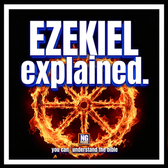
What Does Ezekiel's Vision of the Wheel Mean?
By a foreign river, in exile, Ezekiel sees the throne of God — sovereign even there.
About This Sermon
What do you do when the glory of God appears not in the temple in Jerusalem, but in pagan exile? In The Vision Of A Wheel, Dr. Toby B. Holt opens the book of Ezekiel, Ezekiel 1, where a priest beside the River Chebar sees the heavens opened — a storm of fire from the north, four living creatures, and wheels within wheels full of eyes, with a throne high above. Ezekiel falls on his face before "the appearance of the likeness of the glory of the LORD" (Ezekiel 1:28). From a Reformed and Westminster perspective, this vision unveils the sovereign, omnipresent, and omniscient God who reigns even over exile.
Sermon Chapters
Select a chapter to play the audio from that moment, or “Read” to jump to that part of the transcript below.
Questions This Sermon Answers
Ezekiel prophesied among the Jewish exiles in Babylon in the years surrounding Jerusalem's fall. Its first chapters announce that judgment has come and it is "too late" to avert it, while its later chapters unfold grace, restoration, and hope. As Ezekiel 1:3 says, "the word of the LORD came expressly to Ezekiel the priest... and the hand of the LORD was upon him there." The book reveals God's holiness against sin and His covenant mercy toward a remnant.
Ezekiel was a priest carried into Babylon in an early wave of exile, around 597 B.C. His name means "God strengthens." Ezekiel 1:1-3 places him "among the captives by the River Chebar." Though trained for temple service, he was instead called to be a prophet, serving as both priest and prophet to a displaced people living under the judgment of God.
To a Jew, God's manifest presence dwelt in the temple in Jerusalem, between the cherubim. Yet Ezekiel sees the throne-chariot of God in pagan Babylon. This declares that God is not confined to one place — "Do I not fill heaven and earth? says the LORD" (Jeremiah 23:24) — and it ominously signals that His glory is departing the doomed temple, as Ezekiel 10 will show.
Ezekiel 1:1 dates the vision to "the thirtieth year." A priest's public ministry began at age thirty, so on the very day Ezekiel expected to enter temple service, he was a captive far from Jerusalem — and God met him there. It is no accident that the Lord Jesus likewise "began His ministry at about thirty years of age" (Luke 3:23).
They are cherubim, as Ezekiel 10:20 confirms. Each had four faces — man, lion, ox, and eagle (Ezekiel 1:10) — the highest of God's creatures: mankind, the king of beasts, the strongest domestic animal, and the most majestic bird. Together they picture the whole created order, yet they do not reign; they bear up a firmament beneath the throne of God.
The wheels could move in any direction without turning (Ezekiel 1:17), picturing God's omnipresence — He goes wherever He wills, even to Babylon. Their rims were "full of eyes all around" (Ezekiel 1:18), picturing His omniscience — He sees all. The vision is God's royal chariot-throne: a sovereign limited by no boundary, and from whom nothing is hidden.
Yes. Ezekiel concludes, "This was the appearance of the likeness of the glory of the LORD. So when I saw it, I fell on my face" (Ezekiel 1:28). His worship marks a true manifestation of God. Like the burning bush, the vision is wrapped in fire, for "our God is a consuming fire" (Hebrews 12:29).
The glory that begins to move here, and later departs the temple eastward (Ezekiel 10-11), anticipates Christ, who ascended from the Mount of Olives toward heaven (Acts 1:9-12). As the departing glory preceded the temple's fall, so the gospel reveals that judgment and salvation alike center on the Lord whose glory Ezekiel beheld. To find Jesus in Ezekiel, look for the glory of God.
It teaches that God reigns over every nation and circumstance, even exile. The Westminster Confession (3.1) confesses that God "freely and unchangeably ordain[s] whatsoever comes to pass." The throne above the wheels stands over Babylon as surely as over Jerusalem; the captivity of His people did not mean the defeat of their God.
Though the nation's judgment was fixed, individuals could still repent and believe. God sends His word even amid discipline to extend mercy, to warn of worse to come, and to call sinners home. As Ezekiel 18:32 says, "I have no pleasure in the death of one who dies... Therefore turn and live!" The certainty of judgment never cancels the call to repentance.
Reformed theology insists that God's rule is not confined to the land of promise but extends over every nation, including the powers that carry His people into captivity. John Calvin, in his lectures on Ezekiel, treats the vision of the wheels and the throne above them as proof that God's providence reached the exiles in Babylon: the same God who governed Jerusalem governs the place of judgment. Ezekiel 1:26 shows a throne, and above it a figure with the appearance of a man, affirming that God reigns even in exile.
Key Theological Points
1. The Sovereignty of God Over Exile
The throne above the wheels appears in Babylon, not only Jerusalem. God's people had been carried into captivity, but their God was neither defeated nor left behind; He rules every nation and rides where He wills (Ezekiel 1:20). The Westminster Confession (5.1) teaches that God upholds, directs, and governs "all creatures, actions, and things" by His most wise and holy providence. Exile itself lay within His sovereign hand.
2. The Glory and Holiness of God
Ezekiel's vision is a theophany wrapped in fire — "the appearance of the likeness of the glory of the LORD" (Ezekiel 1:28) — and the prophet falls on his face. The Reformed tradition insists that the fitting response to God's revealed glory is reverent worship and humility, for "our God is a consuming fire" (Hebrews 12:29). His holiness both judges sin and summons sinners to fear Him rightly.
3. The Departing Glory Points to Christ
The glory that begins to move from Jerusalem and later departs the temple eastward (Ezekiel 10-11) anticipates the Lord Jesus, who ascended eastward from the Mount of Olives (Acts 1:9-12). The same glory that withdrew before judgment is revealed fully in Christ, in whom the presence of God returns to dwell with His people as the true and final temple (John 1:14).
The Scripture Text: Ezekiel 1:28 (NKJV)
"Like the appearance of a rainbow in a cloud on a rainy day, so was the appearance of the brightness all around it. This was the appearance of the likeness of the glory of the LORD. So when I saw it, I fell on my face, and I heard a voice of One speaking."
Continue studying: explore the full Book of Ezekiel sermon series, or browse the complete Reformed Sermon Archive.
About Our Speaker

About The Speaker: Dr. Toby Holt serves as the third President of New Geneva Theological Seminary (Colorado Springs, CO), founded 1993. An expository preacher with over 1.9 million sermon downloads on SermonAudio.com, Dr. Holt brings over 17 years of pastoral experience to his verse-by-verse Bible teaching. New Geneva offers Reformed theological education — the M.Div., Th.M., MACM, and Certificate of Biblical Studies, taught live online. For the Doctor of Ministry, contact the registrar about schedule and format.
Sermon Transcript
Summary. In this sermon on Ezekiel 1, Dr. Toby Holt of New Geneva Theological Seminary teaches that Ezekiel's vision of the whirlwind, the four living creatures, and the wheels within wheels is a theophany revealing the sovereign glory of God on His chariot-throne. Because God is omnipresent (the wheels that go anywhere) and omniscient (the eyes upon the rims), He came to Ezekiel in exile in Babylon rather than remaining in the Jerusalem temple, signaling both His unbounded reign and the coming departure of His glory in judgment. Dr. Holt shows that even amid deserved judgment, God graciously sent prophets like Ezekiel to call individuals to repentance and faith.
History Is Cyclical: Why God's People Forget
Another commentator said this, he said the one thing, the one thing that we learn from history is that people don't learn from history. The one thing that we learn from history is that people don't learn from their own history. What was meant by this is that history is cyclical. History is cyclical and people are forgetful.
If you have some hideous event, say some circumstance that has splashed across the pages of history. There's a mantra that people have. We'll say that we will never forget. We'll never forget what's happened.
We'll never forget. It becomes a mantra on its own. Never forget. And the idea is that if we don't forget, that we'll be less inclined to repeat what's been done in the past.
But as I said a moment before, the problem is we do forget. One generation passes and another is born. The sun sets, the sun rises, people do the same things that they have done in the past.
Continue reading the full transcript 33-minute read · 16 sections · every section links back to the audio
The Divided Kingdom and the Fall of the Northern Tribes
Now, if that's true of anyone anywhere, it was true in Israel. See, the Israelites would have these just terrible circumstances, either befall them or which they had launched themselves into. And after they bore all the scar tissue from these horrific situations, they'd say, we won't forget, we won't forget. And then guess what?
They did. They would swear time and time again. They'd swear, we're going to fly right. We're not going to do what we have done in the past.
Just read the Kings or the Chronicles. Like every other chapter, you see some element of that. And then almost overnight, the people just dive headlong into sin once again. Well, that had happened in both Israel, which is the northern kingdom, and Judah, which is a southern kingdom.
Remember, this is a split. There's the divided kingdom. You have the northern kingdom of Israel, you have the southern kingdom of Judah. Both sides, both parties, kings on both kingdoms had engaged in sin continually, repeatedly.
And occasionally a good king would rise up, or at least a better king, and occasionally there would be some improvement. However, in the north, there really wasn't any great improvement, and in 732, something terrible happened. In 732, they got wiped away. You have 10 tribes, 10 tribes in the north, 10 tribes in Israel.
God sent them prophet after prophet after prophet to tell them what was coming, to tell them that they'd done wrong, to tell them they'd sinned, and tell them the judgment was nigh. He did this for generation after generation, sent them the prophets, and they'd kill the prophets. He kept telling them, and on 732, God was done warning them.
It was too late. And so He sent in another nation. Do you remember who that is? The Assyrians.
The more you understand about the Assyrians, you'll know they were a particularly brutal and bloodthirsty lot. The Assyrians came in and just swept away into exile the 10 northernmost tribes. Now, let's say that you were in the south, right?
Judah's Failure to Learn: Prophets Sent and Ignored
Let's say that you were in Judah. You're one of the remaining two tribes. You've got small towns that all are centered around the major city of Jerusalem. You're small, you're vulnerable.
There's other large nations. You know what has happened to the north and you see the hand of God upon it. You know that the northern kingdom was wiped out or was thrown into exile by the hand of God Himself, as was explained well ahead of time by the prophets. So you're sitting there in the south, you're one of two tribes left, what do you do?
What do you do? If you're a historian, if you're a king, what do you do? Do you button up and fly right? Do you say, boy, we got to learn the lessons of those guys.
We got to make sure we don't do the same thing. Oh my goodness, we don't want that to happen to us. Is that what you do? Well, it's what you think you would do, but it's not what they did.
And so God realized that they were going off the tracks. And so He sends them prophets. He sends them prophets. You have Isaiah, you have Jeremiah, you have Ezekiel, you have Daniel, you have men who told him what was going to happen beforehand and men would tell them after destruction came.
All along, the Israelites thought they were doing just fine. They thought they were people who had the intellectual acumen to remember the past, but they didn't. And so they went down the same wrong path of their forefathers, the same wrong path of the people to the north. Even with this klaxon horn sounding of the coming judgment, even with all the prophets, their words ringing in their ears, they didn't change.
They didn't stop, that didn't slow down, that ran headlong into apostasy. And the whole time they were running headlong into apostasy, you know what they would have called it? That they were being virtuous. On our own day and age, how many things that were going on are actually a whole culture, and maybe even segments of the church, diving headlong into apostasy, and at the same time calling it virtuous.
Well, that's what they were doing. They thought they were doing the right thing, or at least they'd convinced themselves they were. And even as the Babylonians, God's instrument, God's tool, God's hammer was on the horizon coming for them, they still didn't change.
"It's Too Late": Judgment and the Hope Within Ezekiel
They still didn't learn. They still didn't stop. Well, now when we come to the book of Ezekiel, now it's too late. The first half of Ezekiel, maybe the first two-thirds, can be summarized in those two words.
It's too late. You've killed the prophets. You've sullied the temple. You've brought in the idols.
Destruction is coming. With that said, as we'll see across these 10 weeks in Ezekiel, even though the first number of chapters and number of weeks we're going to study are difficult and challenging, because they invoke what you might call the severity of God against sin. Although we'll see that in the first number of chapters, the good news, as we go through the book, as we go through the book, we discover that there is hope.
We discover that there's grace.
Ezekiel the Prophet-Priest by the River Chebar
“Now it came to pass in the thirtieth year, in the fourth month, on the fifth day of the month, as I was among the captives by the River Chebar, that the heavens were opened and I saw visions of God.”
— Ezekiel 1:1 (NKJV)
We discover there's a future. All right, let me read verses 1 through 3, and we'll study it, and we'll work our way through as time permits. Verses 1 through 3. Now it came to pass in the 30th year, in the fourth month, on the fifth day of the month, as I was among the captives by the river Chebar, that the heavens were open, and I saw visions of God.
On the fifth day of the month, which was in the fifth year of King Jehoiachin's captivity, the word of the Lord came expressly to Ezekiel the priest, the son of Buzi, in the land of the Chaldeans by the river Chebar, and the hand of the Lord was upon him there. All right, as we said a few moments ago, the book of Ezekiel and its namesake prophet lived during a time of judgment, lived during a time of judgment.
Ezekiel himself had been about 25 years old. He had been trained as a priest. His future was that of a priest. He thought he was going to be a priest, but when he was 25 years old, the Babylonians came calling.
God sent the Babylonians in to judge His own people, but it was slow in this sense, that when the Babylonians first showed up, what they did is they sieged, but then they took with them from Jerusalem, from Judah, they took with them the best and the brightest individuals. So they didn't destroy the temple at that point.
They didn't level the city at that point, but they did take a bunch of the best and the brightest and the smartest and the wealthiest and the people who the cream of the crop, that's who they took. So Ezekiel as a priest had been taken with the first batch of exiles when he was 25 years old out from Jerusalem.
It was the last time he would ever see it again. He would be taken out of Jerusalem and he was taken to Babylon, to a refugee camp. So he's in this first wave of refugees. Now, what else can we learn from verses 1 through 3 about this guy?
What can we learn about Ezekiel himself as we prepare to go into the following 10 weeks? Who was Ezekiel? Well, we learn in verses one through three, his name. His name is Ezekiel, which means that God strengthens.
Beyond that, we learn something about his vocation. This man, Ezekiel, had been trained to become a priest. That was his training. So in a sense, he was both a prophet and a priest, which is somewhat unusual amongst the prophets of God.
The third thing we learn about Ezekiel is that although he was raised up, trained to become a priest, that he would never get the chance.
The Thirtieth Year: Priesthood, Exile, and the Type of Christ
They would never get the chance, at least to serve in the context that he expected. And that's because on what appears to be his 30th birthday, most commentators believe that's what's being referred to when we talk about the 30th year. It's his 30th birthday. Instead of being in the temple, instead of being in Jerusalem, instead of being home, he is far, far away.
On his 30th birthday, Ezekiel, who had anticipated that he would be entering into the priesthood on that very day. Why? Because that's when you became an active priest. You were trained to become a priest, but on your 30th birthday, that's when you were permitted, allowed to serve publicly.
Your public ministry as a priest began when you were 30 years old. Why is that significant? Who else? Who else's public ministry started when they were 30 years old?
Jesus. Jesus' public ministry started when He was 30 years old. Ran until He was about 33. Guess what?
That's also Ezekiel's, the primary ministry that Ezekiel had was when he was 30 to 33. There's a couple of small windows elsewhere in his life. For much of his life, his tongue was silent, as we'll see. But his primary ministry of Ezekiel, this man who was both a prophet and a priest, ran from 30 to 33.
So here he's sitting by the river Chebar. He's sitting in Babylon. He's sitting in the last place that he would expect on his 30th birthday, on the day he thought he'd be entering into the formal priesthood and unable to do that which he had been trained to do. Instead, he's lonely, he's brokenhearted, he's sitting by a river in a refugee camp in Babylon.
That's the context of the first three verses. As a side note, does anyone know what the name of the refugee camp was? Tel Aviv. When you think of the major city in western Israel in the present, it's named after the refugee camp that Ezekiel was in at this time, Tel Aviv.
And you'll see it, I think, in chapter three, the name comes up. Whatever the case, what a bittersweet day. You have this guy, you have this guy who's been trained up for this great future, and instead he's sitting there and there doesn't seem to be a future. There doesn't seem to be a future.
Why? Because Jerusalem, it's been attacked, there's been a siege, people have been exiled, the future doesn't look especially bright, and he's sitting there and he's got to be wondering things. In losing our land, he must be thinking, in losing our land, losing our heritage?
The Heavens Opened: The Vision of the Four Living Creatures
“Also from within it came the likeness of four living creatures. And this was their appearance: they had the likeness of a man. Each one had four faces, and each one had four wings.”
— Ezekiel 1:5-6 (NKJV)
Have we lost our God? Now, whatever he was thinking, in verse 1, something happens on this very day, not an accident. Something happens on this very day, his 30th birthday. Verse 1 says something happens.
Specifically, it says that before this priest, the heavens were opened. This priest got witness to what you might call into the holy of holies, so to speak, to see the ark, so to speak, as we'll see in a minute. On his 30th birthday, he did. He did have access to that which he had desired to have access, but it was in a location he never would have expected.
So the heavens open and he has a vision. Let's look at verses 4 through 14. Then I looked, and behold, a whirlwind was coming out of the north, a great cloud with raging fire engulfing itself, and brightness was all around it and radiating out of its midst like the color of amber out of the midst of the fire.
Also from within it came the likeness of four living creatures. And this was their appearance. They had the likeness of a man. Each one had four faces, and each one had four wings.
Their legs were straight, and the soles of their feet were like the soles of calves' feet. They sparkled like the color of burnished bronze. The hands of a man were under their wings, as of their four sides, and each of the four had faces and wings. The wings touched one another.
The creatures did not turn when they went, but each one went straight forward. As for the likeness of their faces, each one had the face of a man. Each of the four had the face of a lion on the right side. Each four had the face of an ox on the left side, and each of the four had the face of an eagle.
These were their faces, and their wings stretched upward. Two wings of each other touched one another, and two covered their bodies, and each one went straight forward, and they went wherever the spirit wanted to go, and they did not turn when they went. Now, as for the likeness of the living creatures, their appearance was like burning coals of fire, and the appearance of torches going back and forth among the living creatures.
The fire was bright. The living creatures ran back and forth in appearance like a flash of lightning. Let's stop there. You know, there are a few chapters like this.
From one end of the Bible to the other end of the Bible, there's a few chapters that compel you as you're reading it to have to try to picture something that ultimately you can't even do justice to. There's a few chapters quite like this. With that said, what do we think these four creatures represented in verses 1 through 14?
Well, we'll get to that in a moment. There's a lot of theories.
The Whirlwind of Fire: God as a Consuming Fire from the North
But let's start with the whirlwind. In verse 4, Ezekiel's vision starts with the arrival, the coming from the north, of a whirlwind. But it's not an ordinary whirlwind. You know, when you think of a whirlwind, in this context, it meant some amazing, tremendous storm, some squall, some tempest, and perhaps a cyclone, something like that.
That's sort of what's being depicted here. However, there's something different about this particular storm. Ezekiel had seen storms and whirlwinds as such before, but what he had not seen is one that was engulfed in fire. As Ezekiel sat there by the river Chebar, staring out the waters, wondering about the future of himself and his people, this cloud comes, this whirlwind comes, and it's unlike any storm Ezekiel has ever seen in that it's on fire.
There's a raging fire engulfing, as the word scripture uses, it's engulfing itself. Now, God is a side note. God is regularly depicted in the form of fire, theophanies, manifestations of God oftentimes involved fire. Any examples in Exodus?
The burning bush. The burning bush is one, but there's a number. If we call that for other examples, there's a number of them by which fire anticipated and typified this one. Later on Hebrews, it would say, our God is what?
A consuming fire. So here you have this storm. You have this tempest coming. It's on fire, which was unique.
It draws near, it draws near, and it comes from the north. That's not a throwaway line. You see, in Israel and Judah, most of the enemies, most of those who oppressed them from time and time again, oftentimes our enemies came from the north. In this context, you can see that judgment is coming through the fire, through the whirlwind.
Judgment is coming.
The Cherubim: The Totality of Creation Under God's Throne
Now within the cloud, verse 5, we see that there's a likeness of four living creatures. What is the deal with these four creatures? Well, in their descriptions we observe a few different things. Number one, each of these creatures had components of both men, animals, and angels.
Now why is all that significant? Why is it significant that they had components of men, animals, and angels? Well, men, animals, and angels represent the whole of the created realm. Men, animals, and angels represent the totality of those that God has created.
Now as you think about the animals themselves, notice that these animals are not like the mouse and the otter and the house cat and things like that. Rather, the animals that are depicted here are the most authoritative and strong of their kind. You have the lion, which we call the king of the jungle, right?
You have the eagle, and the eagle is the most majestic and feared of the birds in the sky. And you have the ox, which has always been known as the strongest domesticated animal. These creatures, which we understand to be cherubim, represent the strongest, most authoritative parts of the totality of the created realm.
And we're supposed to notice that they're not on top. Although these creatures represent the totality of creation itself, they're not on top. In fact, they seem to be holding up a firmament on top of which is a throne.
The Wheels Within Wheels: The Omnipresence of God
“The appearance of the wheels and their workings was like the color of beryl, and all four had the same likeness. The appearance of their workings was, as it were, a wheel in the middle of a wheel.”
— Ezekiel 1:16 (NKJV)
On top of that is God. All right, let's look at verses 15 through 21. Now as I looked at the living creatures, behold, there was a wheel, a wheel on the earth beside each living creature with its four faces. The appearance of the wheels and their workings was like the color of beryl, and all four had the same likeness.
The appearance of the workings was as it were a wheel in the midst of another wheel. When they moved, they went toward any one of four directions, and they didn't turn aside when they went. As for the rims on the wheel, they were so high they were awesome, and the rims were full of eyes all around the four of them.
And when the living creatures went, the wheels went beside them, and when the living creatures were lifted up from the earth, the wheels were lifted up. Wherever the spirit wanted them to go, they went, because there the spirit went, and the wheels were lifted together with them. For the spirit of the living creatures was in the wheels.
And when those went, these went; when those stood, these stood; and when those were lifted up from the earth, the wheels were lifted up together with them, for the spirit of the living creatures was in the wheels. Here you have this depiction, and this depiction is so startling, so amazing. There's wheels within wheels, there's angels with all these different faces, the rims of the wheels themselves have eyes on.
There's something here that's meant to stagger, and it did stagger Ezekiel, it did stagger. There's something intended to demonstrate great authority and great power. Now guess what? Over the years, over the years, people look at that text and go, well, I don't know what to make of that.
And some secular sources, they look at that and they go, well, you know, Ezekiel, maybe he was high. Ezekiel, maybe it was a UFO. I mean, this is really, this is the conclusions many draw. Rather than just believe, maybe this is God in a form and fashion that we're not accustomed to understanding or seeing Him in, instead of believing that, which the text overtly declares, people reach and they say, you know, drugs, hallucination, UFO.
They say any number of things rather than to come into a direct contact with the text itself and have to deal with the idea that this is God. In days of antiquity, kings could be identified a number of different ways, but many of them were visual. Now, one of the most obvious ways to identify the king was that if there's a throne, if there's a majestic, impressive, formidable throne, then the one sitting on it, he's the king.
Well, the same was true with chariots. Chariots for the king of different nations, different countries, especially in Egypt, especially with the pharaoh. They were designed with grandeur in mind to demonstrate, in their view, the power and the authority and the clout to the one who sat astride it. Chariots, one commentator said that a chariot for someone like pharaoh was designed to be like the Ferrari of the desert.
So chariots, chariots in this context, especially when they were ornate or involved or meticulously crafted, or of gold, or what have you, they were constructed in order to point to the glory of the one who stood astride them. Well, in a similar fashion, what we're seeing here is a chariot. We're seeing a chariot that carries God Himself.
And not only do we see a chariot, but as we'll see in a few more verses from now, there's a throne on top of the chariot. We see the chariot of God, a throne on top of it. And this chariot, interestingly, has many different wheels. And not just wheels in the conventional sense, but wheels within wheels.
When we think of a vehicle, if you've got a Ford Taurus or something out in the lot, you've got a vehicle. And generally speaking, the car can go forward or it can go backward. Now, depending on your power steering, you can probably turn it at a clip to get you somewhere else. But generally speaking, wheels go one or two directions.
The difference with the chariot of God is that there's wheels within the wheels. He had a wheel that might be going this way and a wheel within it that was going the other direction. And the picture there is of a God that could go anywhere that He desired, an omnipresent God. An omnipresent God is being depicted here with wheels that can transport Him anywhere.
There's no jurisdiction, no boundaries. He's not limited to going back or forward. He can go anywhere that He wants. And the proof of the pudding is that He's in Babylon.
He can go wherever He wants.
Eyes on the Rims: The Omniscience of God
But not only is He omnipresent, we see in these wheels that there's rims within the wheels. And within the rims was what? Eyes. Again, picturing this kind of boggles the brain.
I don't know exactly what it looked like, but I know what the eyes were intended to depict. And that's the omniscience of God. He's omnipresent. He can go anywhere He desires.
There's nothing that can stop Him. He can travel to wherever He desires. In fact, we believe that He is everywhere. He's omnipresent.
He's transcendent. And it's depicted here through the wheels on the throne. With that said, the eyes depict His knowledge. He's omniscient.
He knows everything. He knew what was going on in Jerusalem. He also knew what was going on by the river Chebar in Babylon. That's what we are seeing in these verses.
The Firmament and the Voice From the Throne
Okay, let's look at verses 22 through 25. Now, the likeness of the firmament above the heads. This is a platform. You have the angels, and they're side by side with the wheels.
I don't know exactly how that worked, but that's how Scripture depicts it. There's angels, they're side by side, and above them is something called a firmament, a platform. The likeness of the firmament above the heads of the living creatures was like the color of an awesome crystal stretched out above their heads. And under the firmament, their wings spread out straight, one towards one another.
Each one had two with which he covered one side, and each one had two with which he covered the other side of the body. And when they went, I heard the noise of their wings, like the noise of many waters, like the voice of the Almighty, a tumult, like the noise of an army.
And when they stood still, they let down their wings. And then a voice came from above the firmament atop the platform that was over their heads. And whenever they stood, they let down their wings. All right, so far in Ezekiel's vision, there's these powerful, impressive creatures.
Just flapping their wings is the sound of an army. You know, these are not the cute little cherubs they're oftentimes are depicted. You know, you get the hallmark cars and angels and such, and these little tiny things with these little tiny wings. No, here we see that the wings of these angels, and when they start flapping, it's like the voice of an entire army coming.
That's the nature and power of these angels. And alongside them, of course, are these wheels that go in different directions and have eyes on them. And all of that exists with one objective, to uphold or to point to that which is above them, that which is on the firmament.
The Likeness of the Glory of the Lord: The Theophany
“This was the appearance of the likeness of the glory of the Lord. So when I saw it, I fell on my face, and I heard a voice of One speaking.”
— Ezekiel 1:28 (NKJV)
All right, let's look at our remaining verses, verses 26 to 28, to see who this is. Verse 26, And above the firmament, over their heads, was the likeness of a throne. In appearance it was like a sapphire stone. On the likeness of the throne was the likeness of the appearance of a man high above it.
Also from the appearance of His waist and upward I saw, as it were, the color of amber and the appearance of fire all around within it. And from the appearance of His waist and downward I saw, as it were, the appearance of fire with brightness all around. Like the appearance of a rainbow in a cloud on a rainy day, So was the appearance of the brightness all around it.
This was the appearance of the likeness of the glory of the Lord. And so when I saw it, I fell on my face, and I heard the voice of one speaking. In the next few weeks, we're going to talk about what this one had to say. But let me ask you the obvious question.
Verses 26 to 28, who does Ezekiel think he saw? Well, we know he saw God. Why do we know that? Because he says as much.
And he says, because I fell down. I fell down in order to worship this one. As we said before, this is what we call a theophany. There's times, the burning bush is another example.
There's times when God's manifest presence and glory visited His people. And when He did so, it often took the appearance of fire. This is a theophany. And in verse 28, Ezekiel recognizes it as such.
This is not merely a vision just of the angels or just of other creatures in the created realm, but rather, this is God Himself.
God Came to Babylon: The Glory Departing the Temple
Now, stop there for a moment. If you're Ezekiel, how cool is that? Here's the reason why. You had just been sitting there by the riverbank in Babylon, on your 30th birthday, being a priest to nobody, thinking that your service was done, and then what happens?
Just when you think, I can't go to God, He's in His temple, and I'm here in Babylon, just when you think, I can't go to God, what happens? God comes to him. God comes to Ezekiel. If you were an Israelite living in this time, let's say you're a Jew somewhere in the region, and someone asks you, and they say, where is God?
What would have been your answer? Your point, whichever direction Jerusalem was, whichever direction the temple was, you'd say, He's there. He's there on the mercy seat between the cherubim, right? He's there in the holy of holies.
He's there in the temple. To the Jew, that's where God's manifest glory was. With that said, again, imagine Ezekiel's shock when he's sitting in the land of the pagans in a refugee camp. And there, it was there that he encounters God.
He'd prepared all his life to encounter God in the temple. In this particular context, the temple came to him, or at the very least, God came to him on His chair with His throne and something that was likened to the Ark of the Covenant itself. Now, what does it imply that God came to Ezekiel?
What does it imply? Well, I think it implies two things. On the one hand, it implies what I think everyone should have known, but God has no jurisdiction, no boundaries. He can go wherever He wants.
In fact, He's omnipresent. He is everywhere. So on the one hand, this chariot and its multi-wheels that can go anywhere depicted that God could be wherever He wants to, whether it's Babylon, Jerusalem, or what have you. But there was something else implied here.
The fact that God, on His chariot, on His throne, was no longer specifically, at least in this particular vision, in the temple, but was rather in Babylon, implied something terrible. For Ezekiel to see God's glory traveling away from Jerusalem, anticipated that something was about to happen to Jerusalem. For Ezekiel to sit there and see the glory of God had left, so to speak, or was outside of the temple in Jerusalem, suggested something bad was about to happen to Jerusalem.
God's glory being seen somewhere else than the temple suggested something terrible was about to happen to the temple. In a couple weeks, we're going to see what that was. When we get to Ezekiel 10, this will be in the third or fourth week. Ezekiel 10, we're going to see, man, this prophet's going to have another vision.
What he's going to have a vision of is he's going to have a vision of the temple in Jerusalem, but there at the threshold of the temple, he's going to see this chariot again. So in Ezekiel 10, the prophet's going to have a vision of the temple in Jerusalem, but there at the threshold of the temple, he's going to see this chariot with its throne.
And guess what it's going to do? It's going to go from the threshold of the temple up towards the east and then up into the sky. In Ezekiel chapter 10, the prophet is going to see God officially departing the temple. You know the old saying, Elvis has left the building?
This, in a very real and obviously much more powerful way, was God leaving the building. And Ezekiel is going to see that in chapter 10. Well, here he anticipates that event.
Christ in Ezekiel: The Chariot, the Ascension, and Departed Glory
Even back in chapter 1, the fact that God's chariot is already outside before Ezekiel anticipates what is yet to come. As a side note, If you ever want to find Jesus in the Old Testament, you want to find Jesus in Ezekiel, you'll find Him just about everywhere. One example is what I just mentioned.
When the chariot leaves, the temple threshold goes off to the east and up into the sky. What does that anticipate? What does it remind us of? It reminds us of Jesus.
How? Do you remember the ascension? What happened in the ascension? In the ascension, Jesus leaves Jerusalem.
He goes off to the east, to the Mount of Olives, and ascends into the sky. Everything that was here is meant to point us forward to that one and even to that event, to the ascension that would come. But there's something scary about it, and here's what it is. That when God's glory departed in both cases, in Ezekiel chapter 10 and in the ascension in Acts chapter 1, a terrible fate awaited the city and the temple thereafter.
A terrible fate awaited once the glory of God had departed.
Why God Still Sends Prophets: A Call to Repentance Today
All right, let me look to close this morning with a final thought in today's text. This has just been an introduction really to Ezekiel the prophet, Ezekiel the book, and also to the character of God. But in today's text, the prophet Ezekiel, we've briefly introduced him and we've seen one of several visions that he will yet have.
In the weeks to come, we're going to see more of these visions. We're going to see how they applied to Jerusalem and to the temple and to his own people in that day and age. And we're also going to see how these lessons, the object lessons he's going to demonstrate in the chapters to come, apply to our own age.
Now the question, as we look to wrap up this morning, is why would God bother at this point with all this? Remember I said earlier it was too late? It was. Judgment was coming.
So why did God raise up Ezekiel? Why Daniel? Why did God raise up these prophets? Why bother with object lessons?
Well, among other reasons, I think it's because of this. That although in a sense it was too late to forestall His judgment upon the people, that did not mean it was necessarily too late for any of the individual people to come to repentance, to come even to faith, if that's what needed to happen.
I think God sent His prophets, even in the midst of destruction, to extend His arms to them, even if judgment was befalling their community, their city, their nation. I also think He wanted to warn them about what was yet to come. And if they continued down the road of sin and apostasy they were on, the things would only get worse.
And honestly, we're going to see that in the next few weeks as we look at Ezekiel, God sent them Jeremiah, Ezekiel, Daniel, Isaiah, Micah. He sent the men to tell them what was going on, to shed light on their current situation, but also to tell them where it was going to go if they didn't respond.
And again, just the mind-bogglingly terrible, terrifying truth is that they didn't care, or at least they didn't respond. They didn't listen. They didn't heed. Remember we said at the outset that we believe that we're those who we say, they'll never forget, they'll always remember.
God's own people forgot all the time. And so when prophets came and reminded them of their own past, reminded them of what had happened and how that spoke to the future, they killed those prophets. If you hate the message, you'll hate the messenger. And that's what we see here.
So finally, let me ask you, if God were to send the modern church a prophet or prophets, what would he or they say? If God was to look down at modern North American 21st century Christianity, if He was to send a prophet unto us, if He was to send us an Ezekiel, Daniel, Jeremiah, something like that, what would that man or those men say?
What do you think? Really, do you think they'd come, they'd compliment us? They'd look around at the greater church, they'd compliment us on our fidelity? Or do you think they'd critique our idolatry, our apostasy?
But he complimented us on our holiness, or convict us over our compromises? It's what we call a leading question. You know what I think the question is, what do you think? Now if we were convicted by such a prophet, how would we respond?
You see, apocalyptic literature, which Ezekiel is, apocalyptic literature has two components. One is to look back, look past, but the other is to look forward towards the future. Apocalyptic literature looks back and forward at the same time, to both history and future. We are looking in the weeks to come at history, yes, at a historical book that depicts things that happened a long time ago in a place far, far away.
Yes, this is history, but it also points to the future, and we have a hand in what that future looks like. Let's pray for the grace to discern and to do God's will. Let's pray.
More in The Book Of Ezekiel
Continue the verse-by-verse series.
Keep listening — every sermon is free.
160+ expository sermons with full transcripts, across 14 books of the Bible.