top of page

The Book Of Exodus

What Is The Book Of Exodus About?

Last updated: June 2026

Exodus is the great epic of redemption in the Old Testament. When Israel began the book, they were slaves building Pharaoh's cities. When Israel ended the book, they were building God's dwelling. Between those two construction projects lies the most theologically dense and dramatically urgent narrative in all of Scripture: the plagues, the Passover, the parting of the sea, the giving of the Law at Sinai, the golden calf, the renewal of the covenant, and the construction of the Tabernacle. Every chapter ultimately points forward to Jesus Christ — the true Passover Lamb, the greater Moses, and the final Temple in whom all the glory of God dwells bodily.

Exodus is also the book that defines what Israel is. At Sinai, God does not merely give laws — He gives Israel its identity. "You shall be to Me a kingdom of priests and a holy nation" (Exodus 19:6, NKJV). The covenant at Sinai, mediated through Moses and ratified with blood, establishes the structure of Israel's life with God: the moral law of the Ten Commandments, the civil and ceremonial ordinances, and the meticulous pattern of the Tabernacle — a portable Sinai, a meeting place where a holy God could dwell among a sinful people. For the Reformed tradition, Exodus is not merely ancient history. It is the Old Testament's fullest exposition of the doctrines of grace, the nature of the covenant, and the character of the God who saves.

Who Wrote The Book Of Exodus?

The Mosaic authorship of Exodus is affirmed throughout both Testaments. Exodus itself records Moses writing the covenant terms (Exodus 24:4), and Jesus explicitly attributes the five books of Moses to Moses (John 5:46–47; Mark 12:26, NKJV). The book was almost certainly composed during the wilderness period, drawing on Moses' personal memory of the events from his birth through the construction of the Tabernacle. The Pentateuch as a whole is a literary and theological unity that bears the marks of a single presiding author operating under divine inspiration.

The date of the Exodus remains a subject of scholarly discussion. The biblical text places the Exodus 480 years before Solomon's temple (1 Kings 6:1), suggesting a date around 1446 BC — the early date, commonly associated with Amenhotep II of the 18th Dynasty as pharaoh of the Exodus. This has been defended by conservative scholars including John Rea and Leon Wood, and remains the preferred chronology in the Reformed tradition. The late date (ca. 1260 BC), associated with Ramesses II, requires adjusting the biblical chronology in ways that most confessional scholars find unpersuasive.

Exodus covers roughly 80 years of Moses' life, from his birth under a death edict (Exodus 1) through the completion of the Tabernacle (Exodus 40). It divides naturally into two halves: deliverance from Egypt (chapters 1–18) and the covenant at Sinai (chapters 19–40). The book's literary architecture is itself theological — the movement from slavery to covenant, from bondage to worship, mirrors the structure of salvation itself.

Primary Theological Themes

Redemption as the Foundation of Everything

Exodus establishes the pattern of redemption that the entire Bible unfolds. God acts first — "I have seen the oppression of My people...I have heard their cry...I know their sorrows. So I have come down to deliver them" (Exodus 3:7–8, NKJV). Redemption precedes law. The Ten Commandments begin not with a demand but with a declaration: "I am the LORD your God, who brought you out of the land of Egypt, out of the house of bondage" (Exodus 20:2, NKJV). This is the grammar of grace: indicative before imperative, deliverance before demand. The Westminster Confession (WCF 7) grounds the covenant of grace in precisely this pattern — God's unilateral act of rescue as the foundation of all covenant obligation.

The Holiness of God and the Need for Mediation

The Sinai encounter repeatedly emphasizes the absolute holiness of God and the impossibility of sinners approaching Him without mediation. The people tremble at the foot of the mountain and beg Moses to speak on their behalf (Exodus 20:18–19). The Tabernacle's layered architecture — outer court, Holy Place, Most Holy Place — spatially encodes the graduated access to God's presence based on priestly standing and sacrificial atonement. Only the high priest entered the Most Holy Place, and only once a year, with blood. The Confession's doctrine of Christ as Mediator (WCF 8) is the New Testament fulfillment of what the Tabernacle made structurally explicit: the holy God cannot be approached directly by sinful humanity — a Mediator is necessary.

The Passover as Type of the Atonement

The Passover is the theological heart of Exodus. A lamb without blemish, slaughtered at twilight, its blood applied to the doorposts so that the destroying angel would "pass over" (Exodus 12:13, NKJV) — this is the defining act of Israel's deliverance. Paul identifies the fulfillment explicitly: "For indeed Christ, our Passover, was sacrificed for us" (1 Corinthians 5:7, NKJV). John the Baptist's identification of Jesus as "the Lamb of God who takes away the sin of the world" (John 1:29, NKJV) operates within the Passover framework. The Confession's treatment of Christ's priestly work (WCF 8.5) — offering Himself as a sacrifice to satisfy divine justice — is the substance of which the Passover lamb was the shadow.

The Law as Covenant Framework, Not Salvation Mechanism

The Ten Commandments are given to a people already redeemed — not as a means of earning salvation but as the structure for living as God's covenant people. The Reformed tradition, following the Confession (WCF 19), distinguishes three uses of the law: pedagogical (revealing sin), civil (restraining wickedness), and normative (guiding the redeemed life). Exodus establishes all three. The law given at Sinai is not opposed to the gospel — it is the gospel's covenantal form for Israel. Those who read Exodus as teaching salvation by law-keeping have misread both the structure of the text and the grammar of the covenant it establishes.

The Tabernacle as Theology in Architecture

Exodus 25–40 devotes more space to the Tabernacle than to the entire creation account in Genesis. This is not accidental. The Tabernacle is where the narrative resolves: "And Moses was not able to enter the tabernacle of meeting, because the cloud rested above it, and the glory of the LORD filled the tabernacle" (Exodus 40:35, NKJV). God has come to dwell with His people. Every element — the ark and mercy seat, the lampstand, the table of showbread, the altar of incense, the veil — is a theological statement pointing forward to Christ, in whom all the fullness of the Godhead dwells bodily (Colossians 2:9). The book of Hebrews expounds this at length, showing the Tabernacle as a copy and shadow of the heavenly reality.

Westminster Confession Connections

The Covenant of Grace (WCF 7.5) — The Sinai covenant is the covenant of grace administered "under the law" in the Old Testament form. The Confession affirms that this covenant was "differently administered in the time of the law, and in the time of the gospel" — but it is the same covenant of grace, the same mediatorial structure, the same gracious God. Exodus is the fullest Old Testament exposition of this covenantal administration.

The Moral Law (WCF 19.1–2) — The Ten Commandments of Exodus 20 are the moral law, which "God gave to Israel at Horeb, being a perfect rule of righteousness." The Confession teaches that this law "doth for ever bind all, as well justified persons as others, to the obedience thereof" — not as a means of justification, but as the perpetual rule of life for God's covenant people. The Decalogue's two-table structure (duties to God, duties to neighbor) forms the backbone of the Confession's ethical framework.

Christ as Mediator (WCF 8) — The Tabernacle's entire design — the gradations of holiness, the priestly mediators, the sacrificial system — points to the necessity of a Mediator. The Confession's chapter on Christ as Mediator is the New Testament fulfillment of what Exodus encoded in portable architecture. Christ is the true High Priest, the true Temple, the true Passover Lamb, and the true Mercy Seat.

Perseverance and the Golden Calf (WCF 17) — The golden calf episode (Exodus 32) is the definitive Old Testament crisis of covenant faithfulness. Israel commits idolatry at the very moment Moses is receiving the law. The covenant should have been annulled. That it was not — that God relented at Moses' intercession and renewed the covenant in Exodus 34 — is the Old Testament's most dramatic illustration of the perseverance of the saints and the faithfulness of the covenant God. The Confession's chapter on perseverance (WCF 17) finds its deepest Old Testament grounding here.

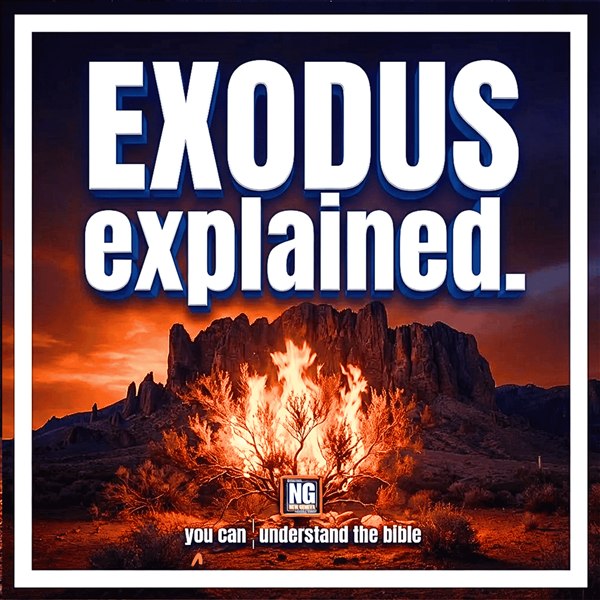
Sermon Series: Exodus Explained

This verse-by-verse series by Dr. Toby Holt traces the Book of Exodus from Israel's bondage to the completion of the Tabernacle — 15 sermons covering all 40 chapters. Free on Apple Podcasts, Spotify, and SermonAudio.

Frequently Asked Questions About Exodus

What is the Book of Exodus about?

Exodus is the story of God rescuing His enslaved people from Egypt and constituting them as His covenant nation at Mount Sinai. It divides into two halves: deliverance from Egypt (chapters 1–18) and the covenant at Sinai (chapters 19–40). The great events include the burning bush, the ten plagues, the Passover, the parting of the Red Sea, the giving of the Ten Commandments, the golden calf, and the construction of the Tabernacle. Every chapter ultimately points forward to Jesus Christ — the true Passover Lamb, the greater Moses, and the final Temple in whom the fullness of God dwells bodily (Colossians 2:9, NKJV).

Who was Pharaoh in the Book of Exodus?

The identity of the Exodus Pharaoh has been debated for centuries. The Reformed tradition generally favors the early Exodus date of c. 1446 BC based on 1 Kings 6:1 (480 years before Solomon's temple), which places the Exodus during the reign of Amenhotep II of the 18th Dynasty, with Thutmose III as the Pharaoh of the oppression. The alternative late-date view (c. 1260 BC) associated with Ramesses II requires adjusting the biblical chronology in ways most confessional scholars find unpersuasive.

How did Moses part the Red Sea?

Moses did not part the Red Sea — God did. "Moses stretched out his hand over the sea; and the LORD caused the sea to go back by a strong east wind all that night, and made the sea into dry land, and the waters were divided" (Exodus 14:21, NKJV). The parting of the sea is consistently presented in Scripture as a direct act of divine power. The Hebrew is Yam Suph — "Sea of Reeds" — though the traditional translation "Red Sea" is ancient and accepted. Paul interprets the sea crossing as a type of baptism (1 Corinthians 10:1–2), and the prophets repeatedly invoke it as the paradigmatic act of salvation that God will repeat in the new exodus (Isaiah 43:16–19).

Why did God harden Pharaoh's heart?

The text uses three terms: Pharaoh hardened his own heart (Exodus 8:15, 32), Pharaoh's heart was hardened (passive, Exodus 7:13), and God hardened Pharaoh's heart (Exodus 9:12; 10:20). Paul cites this in Romans 9:17–18 as a demonstration of God's sovereign freedom in both mercy and judgment. The Reformed tradition understands God's hardening as a judicial act — giving Pharaoh over to the rebellion already present in his heart — not as the creation of evil in a previously neutral person. God's purpose was to multiply His signs, so that His name would be declared throughout all the earth (Exodus 9:16, NKJV).

What is the significance of the Passover?

The Passover is the redemptive pivot of the entire Old Testament. A lamb without blemish, slaughtered at twilight, its blood applied to the doorposts — the destroying angel passes over every household sheltered under the blood (Exodus 12:13, NKJV). Paul identifies the fulfillment: "For indeed Christ, our Passover, was sacrificed for us" (1 Corinthians 5:7, NKJV). The Passover establishes the pattern of substitutionary atonement: an innocent substitute bearing the judgment due to the guilty. Every element of the Passover — the lamb, the blood, the unleavened bread, the haste, the households — finds its fulfillment in Christ and His cross.

What were the Ten Commandments and what do they mean?

The Ten Commandments are God's summary of the moral law, given at Sinai to a people already redeemed — not as a means of earning salvation but as the covenant structure for living as God's people (Exodus 20, NKJV). The first four commandments govern the relationship between Israel and God (no other gods, no idols, no misuse of God's name, Sabbath observance); the last six govern relationships between people (honour parents, no murder, no adultery, no stealing, no false witness, no coveting). Jesus summarized them as love for God and love for neighbor (Matthew 22:37–40). The Westminster Confession teaches this law is perpetually binding on all people as the rule of righteous living.

What was the purpose of the Tabernacle?

The Tabernacle was God's dwelling place among His people — a portable Sinai, a meeting place where a holy God could be approached by sinful humanity through priestly mediation and sacrifice. "And let them make Me a sanctuary, that I may dwell among them" (Exodus 25:8, NKJV). Its layered architecture (outer court, Holy Place, Most Holy Place) encoded the graduated access to God's presence based on priestly standing and blood atonement. Every element pointed forward to Christ: the altar to His sacrifice, the lampstand to Christ as the light of the world, the mercy seat to His propitiatory work. Hebrews calls it "a copy and shadow of heavenly things" (Hebrews 8:5, NKJV).

What does Exodus mean for Christians today?

Exodus is the paradigm for Christian salvation. Just as Israel was enslaved in Egypt, humanity is enslaved to sin. Just as God sent Moses to deliver Israel, God sent His Son. Just as the Passover lamb's blood protected Israel from judgment, Christ's blood protects all who shelter under it by faith. Just as Israel was constituted as a covenant people at Sinai, the church is constituted by the New Covenant at Calvary. The apostle Peter applies the Exodus covenant formula directly to the church: "You are a chosen generation, a royal priesthood, a holy nation, His own special people" (1 Peter 2:9, NKJV), echoing Exodus 19:6 precisely. The whole Christian life is a new Exodus — from slavery to sonship, from Egypt to the Promised Land.

What Is The Book Of Exodus About?

Last updated: June 2026

Exodus is the great epic of redemption in the Old Testament. When Israel began the book, they were slaves building Pharaoh's cities. When Israel ended the book, they were building God's dwelling. Between those two construction projects lies the most theologically dense and dramatically urgent narrative in all of Scripture: the plagues, the Passover, the parting of the sea, the giving of the Law at Sinai, the golden calf, the renewal of the covenant, and the construction of the Tabernacle. Every chapter ultimately points forward to Jesus Christ — the true Passover Lamb, the greater Moses, and the final Temple in whom all the glory of God dwells bodily.

Exodus is also the book that defines what Israel is. At Sinai, God does not merely give laws — He gives Israel its identity. "You shall be to Me a kingdom of priests and a holy nation" (Exodus 19:6, NKJV). The covenant at Sinai, mediated through Moses and ratified with blood, establishes the structure of Israel's life with God: the moral law of the Ten Commandments, the civil and ceremonial ordinances, and the meticulous pattern of the Tabernacle — a portable Sinai, a meeting place where a holy God could dwell among a sinful people. For the Reformed tradition, Exodus is not merely ancient history. It is the Old Testament's fullest exposition of the doctrines of grace, the nature of the covenant, and the character of the God who saves.

Who Wrote The Book Of Exodus?

The Mosaic authorship of Exodus is affirmed throughout both Testaments. Exodus itself records Moses writing the covenant terms (Exodus 24:4), and Jesus explicitly attributes the five books of Moses to Moses (John 5:46–47; Mark 12:26, NKJV). The book was almost certainly composed during the wilderness period, drawing on Moses' personal memory of the events from his birth through the construction of the Tabernacle. The Pentateuch as a whole is a literary and theological unity that bears the marks of a single presiding author operating under divine inspiration.

The date of the Exodus remains a subject of scholarly discussion. The biblical text places the Exodus 480 years before Solomon's temple (1 Kings 6:1), suggesting a date around 1446 BC — the early date, commonly associated with Amenhotep II of the 18th Dynasty as pharaoh of the Exodus. This has been defended by conservative scholars including John Rea and Leon Wood, and remains the preferred chronology in the Reformed tradition. The late date (ca. 1260 BC), associated with Ramesses II, requires adjusting the biblical chronology in ways that most confessional scholars find unpersuasive.

Exodus covers roughly 80 years of Moses' life, from his birth under a death edict (Exodus 1) through the completion of the Tabernacle (Exodus 40). It divides naturally into two halves: deliverance from Egypt (chapters 1–18) and the covenant at Sinai (chapters 19–40). The book's literary architecture is itself theological — the movement from slavery to covenant, from bondage to worship, mirrors the structure of salvation itself.

Primary Theological Themes

Redemption as the Foundation of Everything

Exodus establishes the pattern of redemption that the entire Bible unfolds. God acts first — "I have seen the oppression of My people...I have heard their cry...I know their sorrows. So I have come down to deliver them" (Exodus 3:7–8, NKJV). Redemption precedes law. The Ten Commandments begin not with a demand but with a declaration: "I am the LORD your God, who brought you out of the land of Egypt, out of the house of bondage" (Exodus 20:2, NKJV). This is the grammar of grace: indicative before imperative, deliverance before demand. The Westminster Confession (WCF 7) grounds the covenant of grace in precisely this pattern — God's unilateral act of rescue as the foundation of all covenant obligation.

The Holiness of God and the Need for Mediation

The Sinai encounter repeatedly emphasizes the absolute holiness of God and the impossibility of sinners approaching Him without mediation. The people tremble at the foot of the mountain and beg Moses to speak on their behalf (Exodus 20:18–19). The Tabernacle's layered architecture — outer court, Holy Place, Most Holy Place — spatially encodes the graduated access to God's presence based on priestly standing and sacrificial atonement. Only the high priest entered the Most Holy Place, and only once a year, with blood. The Confession's doctrine of Christ as Mediator (WCF 8) is the New Testament fulfillment of what the Tabernacle made structurally explicit: the holy God cannot be approached directly by sinful humanity — a Mediator is necessary.

The Passover as Type of the Atonement

The Passover is the theological heart of Exodus. A lamb without blemish, slaughtered at twilight, its blood applied to the doorposts so that the destroying angel would "pass over" (Exodus 12:13, NKJV) — this is the defining act of Israel's deliverance. Paul identifies the fulfillment explicitly: "For indeed Christ, our Passover, was sacrificed for us" (1 Corinthians 5:7, NKJV). John the Baptist's identification of Jesus as "the Lamb of God who takes away the sin of the world" (John 1:29, NKJV) operates within the Passover framework. The Confession's treatment of Christ's priestly work (WCF 8.5) — offering Himself as a sacrifice to satisfy divine justice — is the substance of which the Passover lamb was the shadow.

The Law as Covenant Framework, Not Salvation Mechanism

The Ten Commandments are given to a people already redeemed — not as a means of earning salvation but as the structure for living as God's covenant people. The Reformed tradition, following the Confession (WCF 19), distinguishes three uses of the law: pedagogical (revealing sin), civil (restraining wickedness), and normative (guiding the redeemed life). Exodus establishes all three. The law given at Sinai is not opposed to the gospel — it is the gospel's covenantal form for Israel. Those who read Exodus as teaching salvation by law-keeping have misread both the structure of the text and the grammar of the covenant it establishes.

The Tabernacle as Theology in Architecture

Exodus 25–40 devotes more space to the Tabernacle than to the entire creation account in Genesis. This is not accidental. The Tabernacle is where the narrative resolves: "And Moses was not able to enter the tabernacle of meeting, because the cloud rested above it, and the glory of the LORD filled the tabernacle" (Exodus 40:35, NKJV). God has come to dwell with His people. Every element — the ark and mercy seat, the lampstand, the table of showbread, the altar of incense, the veil — is a theological statement pointing forward to Christ, in whom all the fullness of the Godhead dwells bodily (Colossians 2:9). The book of Hebrews expounds this at length, showing the Tabernacle as a copy and shadow of the heavenly reality.

Sermon Series: Exodus Explained

This verse-by-verse series by Dr. Toby Holt traces the Book of Exodus from Israel's bondage to the completion of the Tabernacle — 15 sermons covering all 40 chapters. Free on Apple Podcasts, Spotify, and SermonAudio.

Frequently Asked Questions About Exodus

Who wrote the Book of Exodus and when?

Moses wrote Exodus during the wilderness period. The text itself records Moses writing (Exodus 24:4), and Jesus explicitly attributes the five books of Moses to Moses (John 5:46–47; Mark 12:26, NKJV). The date of the Exodus is debated, but the Reformed tradition generally favors the early date of approximately 1446 BC based on the 480-year chronology of 1 Kings 6:1, placing the Exodus during the reign of Amenhotep II of the 18th Dynasty.

What is the theological significance of the Passover?

The Passover is the redemptive pivot of the entire Old Testament. A lamb without blemish, slaughtered at twilight, its blood applied to the doorposts — the destroying angel passes over every household sheltering under the blood. Paul identifies the fulfillment: "For indeed Christ, our Passover, was sacrificed for us" (1 Corinthians 5:7, NKJV). The Passover establishes the pattern of substitutionary atonement — an innocent substitute bearing the judgment that falls on the guilty — that the entire sacrificial system develops and Christ fulfills once for all.

What does the burning bush reveal about God?

The burning bush reveals three things simultaneously. First, God's holy presence — Moses must remove his sandals on holy ground (Exodus 3:5). Second, God's compassionate awareness — "I have seen...I have heard...I know their sorrows" (Exodus 3:7). Third, and most profoundly, God's eternal self-existence: "I AM WHO I AM" (Exodus 3:14, NKJV). The divine name Yahweh, derived from the Hebrew verb "to be," declares God's aseity — He exists of Himself, depends on nothing, and is the ground of all being. When Jesus says "Before Abraham was, I AM" (John 8:58, NKJV), He is deliberately claiming this divine name as His own.

Why did God harden Pharaoh's heart?

The hardening of Pharaoh's heart is one of the most theologically significant and carefully constructed accounts in the Old Testament. The text uses three terms: Pharaoh hardened his own heart (Exodus 8:15, 32), Pharaoh's heart was hardened (passive, Exodus 7:13), and God hardened Pharaoh's heart (Exodus 9:12; 10:20). Paul cites this in Romans 9:17–18 as a demonstration of God's sovereign freedom in mercy and judgment. The Reformed tradition, following Augustine and Calvin, understands God's hardening as a judicial act — God giving Pharaoh over to the rebellion already present in his heart — not as the creation of evil in a previously neutral soul.

What was the purpose of the Ten Commandments?

The Ten Commandments are the summary of the moral law, given to a people already redeemed — not as a means of earning salvation but as the structure for life in covenant with God. The Westminster Confession (WCF 19.1–2) teaches that this law "doth for ever bind all, as well justified persons as others, to the obedience thereof." The Reformed tradition distinguishes three uses of the law: the mirror use (revealing sin and driving sinners to Christ), the civil use (restraining wickedness in society), and the normative use (guiding the redeemed life). Jesus' summary — love God, love neighbor — does not abolish the Decalogue but concentrates it.

What does the Tabernacle teach about God?

The Tabernacle teaches that God is holy and that sinful humanity cannot approach Him directly — a Mediator and an atoning sacrifice are necessary. Its layered architecture (outer court, Holy Place, Most Holy Place) spatially encodes the graduated access to God's presence. Every element points forward to Christ: the altar to His sacrifice, the laver to baptism, the lampstand to Christ as the light of the world, the table of showbread to the Eucharist, the incense altar to His intercession, and the Ark with its mercy seat to His propitiatory work. Hebrews expounds this typology exhaustively, showing the Tabernacle as "a copy and shadow of heavenly things" (Hebrews 8:5, NKJV).

What is the redemptive-historical significance of Exodus?

Exodus is the paradigmatic act of redemption in the Old Testament — the event Israel returns to again and again to understand what God is like and what salvation means. The prophets promise a "new Exodus" (Isaiah 40–55; Jeremiah 31; Ezekiel 20). Jesus' death and resurrection are described in Luke 9:31 as his "departure" — the same word as Exodus in Greek. The book of Revelation draws heavily on Exodus imagery for its account of the final deliverance from the Egypt of this age. The whole Bible is, in a sense, an extended commentary on Exodus: humanity enslaved, God descending to deliver, the blood of a lamb, a people constituted by covenant, and the glory of God coming to dwell in the midst of His redeemed people.

Study Exodus With New Geneva

New Geneva Theological Seminary exists to train men and women in the full counsel of God. Exodus is not a book we teach past — it is the foundation on which Reformed theology stands. Our fully online, Westminster-confessional programs are designed to work around your life and calling, whether you are preparing for ordained ministry or committed to going deeper in the Word. Explore our degree programs →

spotify-button.png
apple-podcasts-badge.png

What Is The Book Of Exodus About?

Last updated: June 2026

Exodus is the great epic of redemption in the Old Testament. When Israel began the book, they were slaves building Pharaoh's cities. When Israel ended the book, they were building God's dwelling. Between those two construction projects lies the most theologically dense and dramatically urgent narrative in all of Scripture: the plagues, the Passover, the parting of the sea, the giving of the Law at Sinai, the golden calf, the renewal of the covenant, and the construction of the Tabernacle. Every chapter ultimately points forward to Jesus Christ — the true Passover Lamb, the greater Moses, and the final Temple in whom all the glory of God dwells bodily.

Exodus is also the book that defines what Israel is. At Sinai, God does not merely give laws — He gives Israel its identity. "You shall be to Me a kingdom of priests and a holy nation" (Exodus 19:6, NKJV). The covenant at Sinai, mediated through Moses and ratified with blood, establishes the structure of Israel's life with God: the moral law of the Ten Commandments, the civil and ceremonial ordinances, and the meticulous pattern of the Tabernacle — a portable Sinai, a meeting place where a holy God could dwell among a sinful people. For the Reformed tradition, Exodus is not merely ancient history. It is the Old Testament's fullest exposition of the doctrines of grace, the nature of the covenant, and the character of the God who saves.

Who Wrote The Book Of Exodus?

The Mosaic authorship of Exodus is affirmed throughout both Testaments. Exodus itself records Moses writing the covenant terms (Exodus 24:4), and Jesus explicitly attributes the five books of Moses to Moses (John 5:46–47; Mark 12:26, NKJV). The book was almost certainly composed during the wilderness period, drawing on Moses' personal memory of the events from his birth through the construction of the Tabernacle. The Pentateuch as a whole is a literary and theological unity that bears the marks of a single presiding author operating under divine inspiration.

The date of the Exodus remains a subject of scholarly discussion. The biblical text places the Exodus 480 years before Solomon's temple (1 Kings 6:1), suggesting a date around 1446 BC — the early date, commonly associated with Amenhotep II of the 18th Dynasty as pharaoh of the Exodus. This has been defended by conservative scholars including John Rea and Leon Wood, and remains the preferred chronology in the Reformed tradition. The late date (ca. 1260 BC), associated with Ramesses II, requires adjusting the biblical chronology in ways that most confessional scholars find unpersuasive.

Exodus covers roughly 80 years of Moses' life, from his birth under a death edict (Exodus 1) through the completion of the Tabernacle (Exodus 40). It divides naturally into two halves: deliverance from Egypt (chapters 1–18) and the covenant at Sinai (chapters 19–40). The book's literary architecture is itself theological — the movement from slavery to covenant, from bondage to worship, mirrors the structure of salvation itself.

Primary Theological Themes

Redemption as the Foundation of Everything

Exodus establishes the pattern of redemption that the entire Bible unfolds. God acts first — "I have seen the oppression of My people...I have heard their cry...I know their sorrows. So I have come down to deliver them" (Exodus 3:7–8, NKJV). Redemption precedes law. The Ten Commandments begin not with a demand but with a declaration: "I am the LORD your God, who brought you out of the land of Egypt, out of the house of bondage" (Exodus 20:2, NKJV). This is the grammar of grace: indicative before imperative, deliverance before demand. The Westminster Confession (WCF 7) grounds the covenant of grace in precisely this pattern — God's unilateral act of rescue as the foundation of all covenant obligation.

The Holiness of God and the Need for Mediation

The Sinai encounter repeatedly emphasizes the absolute holiness of God and the impossibility of sinners approaching Him without mediation. The people tremble at the foot of the mountain and beg Moses to speak on their behalf (Exodus 20:18–19). The Tabernacle's layered architecture — outer court, Holy Place, Most Holy Place — spatially encodes the graduated access to God's presence based on priestly standing and sacrificial atonement. Only the high priest entered the Most Holy Place, and only once a year, with blood. The Confession's doctrine of Christ as Mediator (WCF 8) is the New Testament fulfillment of what the Tabernacle made structurally explicit: the holy God cannot be approached directly by sinful humanity — a Mediator is necessary.

The Passover as Type of the Atonement

The Passover is the theological heart of Exodus. A lamb without blemish, slaughtered at twilight, its blood applied to the doorposts so that the destroying angel would "pass over" (Exodus 12:13, NKJV) — this is the defining act of Israel's deliverance. Paul identifies the fulfillment explicitly: "For indeed Christ, our Passover, was sacrificed for us" (1 Corinthians 5:7, NKJV). John the Baptist's identification of Jesus as "the Lamb of God who takes away the sin of the world" (John 1:29, NKJV) operates within the Passover framework. The Confession's treatment of Christ's priestly work (WCF 8.5) — offering Himself as a sacrifice to satisfy divine justice — is the substance of which the Passover lamb was the shadow.

The Law as Covenant Framework, Not Salvation Mechanism

The Ten Commandments are given to a people already redeemed — not as a means of earning salvation but as the structure for living as God's covenant people. The Reformed tradition, following the Confession (WCF 19), distinguishes three uses of the law: pedagogical (revealing sin), civil (restraining wickedness), and normative (guiding the redeemed life). Exodus establishes all three. The law given at Sinai is not opposed to the gospel — it is the gospel's covenantal form for Israel. Those who read Exodus as teaching salvation by law-keeping have misread both the structure of the text and the grammar of the covenant it establishes.

The Tabernacle as Theology in Architecture

Exodus 25–40 devotes more space to the Tabernacle than to the entire creation account in Genesis. This is not accidental. The Tabernacle is where the narrative resolves: "And Moses was not able to enter the tabernacle of meeting, because the cloud rested above it, and the glory of the LORD filled the tabernacle" (Exodus 40:35, NKJV). God has come to dwell with His people. Every element — the ark and mercy seat, the lampstand, the table of showbread, the altar of incense, the veil — is a theological statement pointing forward to Christ, in whom all the fullness of the Godhead dwells bodily (Colossians 2:9). The book of Hebrews expounds this at length, showing the Tabernacle as a copy and shadow of the heavenly reality.

Sermon Series: Exodus Explained

This verse-by-verse series by Dr. Toby Holt traces the Book of Exodus from Israel's bondage to the completion of the Tabernacle — 15 sermons covering all 40 chapters. Free on Apple Podcasts, Spotify, and SermonAudio.

Frequently Asked Questions About Exodus

Who wrote the Book of Exodus and when?

Moses wrote Exodus during the wilderness period. The text itself records Moses writing (Exodus 24:4), and Jesus explicitly attributes the five books of Moses to Moses (John 5:46–47; Mark 12:26, NKJV). The date of the Exodus is debated, but the Reformed tradition generally favors the early date of approximately 1446 BC based on the 480-year chronology of 1 Kings 6:1, placing the Exodus during the reign of Amenhotep II of the 18th Dynasty.

What is the theological significance of the Passover?

The Passover is the redemptive pivot of the entire Old Testament. A lamb without blemish, slaughtered at twilight, its blood applied to the doorposts — the destroying angel passes over every household sheltering under the blood. Paul identifies the fulfillment: "For indeed Christ, our Passover, was sacrificed for us" (1 Corinthians 5:7, NKJV). The Passover establishes the pattern of substitutionary atonement — an innocent substitute bearing the judgment that falls on the guilty — that the entire sacrificial system develops and Christ fulfills once for all.

What does the burning bush reveal about God?

The burning bush reveals three things simultaneously. First, God's holy presence — Moses must remove his sandals on holy ground (Exodus 3:5). Second, God's compassionate awareness — "I have seen...I have heard...I know their sorrows" (Exodus 3:7). Third, and most profoundly, God's eternal self-existence: "I AM WHO I AM" (Exodus 3:14, NKJV). The divine name Yahweh, derived from the Hebrew verb "to be," declares God's aseity — He exists of Himself, depends on nothing, and is the ground of all being. When Jesus says "Before Abraham was, I AM" (John 8:58, NKJV), He is deliberately claiming this divine name as His own.

Why did God harden Pharaoh's heart?

The hardening of Pharaoh's heart is one of the most theologically significant and carefully constructed accounts in the Old Testament. The text uses three terms: Pharaoh hardened his own heart (Exodus 8:15, 32), Pharaoh's heart was hardened (passive, Exodus 7:13), and God hardened Pharaoh's heart (Exodus 9:12; 10:20). Paul cites this in Romans 9:17–18 as a demonstration of God's sovereign freedom in mercy and judgment. The Reformed tradition, following Augustine and Calvin, understands God's hardening as a judicial act — God giving Pharaoh over to the rebellion already present in his heart — not as the creation of evil in a previously neutral soul.

What was the purpose of the Ten Commandments?

The Ten Commandments are the summary of the moral law, given to a people already redeemed — not as a means of earning salvation but as the structure for life in covenant with God. The Westminster Confession (WCF 19.1–2) teaches that this law "doth for ever bind all, as well justified persons as others, to the obedience thereof." The Reformed tradition distinguishes three uses of the law: the mirror use (revealing sin and driving sinners to Christ), the civil use (restraining wickedness in society), and the normative use (guiding the redeemed life). Jesus' summary — love God, love neighbor — does not abolish the Decalogue but concentrates it.

What does the Tabernacle teach about God?

The Tabernacle teaches that God is holy and that sinful humanity cannot approach Him directly — a Mediator and an atoning sacrifice are necessary. Its layered architecture (outer court, Holy Place, Most Holy Place) spatially encodes the graduated access to God's presence. Every element points forward to Christ: the altar to His sacrifice, the laver to baptism, the lampstand to Christ as the light of the world, the table of showbread to the Eucharist, the incense altar to His intercession, and the Ark with its mercy seat to His propitiatory work. Hebrews expounds this typology exhaustively, showing the Tabernacle as "a copy and shadow of heavenly things" (Hebrews 8:5, NKJV).

What is the redemptive-historical significance of Exodus?

Exodus is the paradigmatic act of redemption in the Old Testament — the event Israel returns to again and again to understand what God is like and what salvation means. The prophets promise a "new Exodus" (Isaiah 40–55; Jeremiah 31; Ezekiel 20). Jesus' death and resurrection are described in Luke 9:31 as his "departure" — the same word as Exodus in Greek. The book of Revelation draws heavily on Exodus imagery for its account of the final deliverance from the Egypt of this age. The whole Bible is, in a sense, an extended commentary on Exodus: humanity enslaved, God descending to deliver, the blood of a lamb, a people constituted by covenant, and the glory of God coming to dwell in the midst of His redeemed people.

Study Exodus With New Geneva

New Geneva Theological Seminary exists to train men and women in the full counsel of God. Exodus is not a book we teach past — it is the foundation on which Reformed theology stands. Our fully online, Westminster-confessional programs are designed to work around your life and calling, whether you are preparing for ordained ministry or committed to going deeper in the Word. Explore our degree programs →

Frequently Asked Questions About Exodus

What is the Book of Exodus about?

Exodus is the story of God rescuing His enslaved people from Egypt and constituting them as His covenant nation at Mount Sinai. It divides into two halves: deliverance from Egypt (chapters 1–18) and the covenant at Sinai (chapters 19–40). The great events include the burning bush, the ten plagues, the Passover, the parting of the Red Sea, the giving of the Ten Commandments, the golden calf, and the construction of the Tabernacle. Every chapter ultimately points forward to Jesus Christ — the true Passover Lamb, the greater Moses, and the final Temple in whom the fullness of God dwells bodily (Colossians 2:9, NKJV).

Who was Pharaoh in the Book of Exodus?

The identity of the Exodus Pharaoh has been debated for centuries. The Reformed tradition generally favors the early Exodus date of c. 1446 BC based on 1 Kings 6:1 (480 years before Solomon's temple), which places the Exodus during the reign of Amenhotep II of the 18th Dynasty, with Thutmose III as the Pharaoh of the oppression. The alternative late-date view (c. 1260 BC) associated with Ramesses II requires adjusting the biblical chronology in ways most confessional scholars find unpersuasive.

How did Moses part the Red Sea?

Moses did not part the Red Sea — God did. "Moses stretched out his hand over the sea; and the LORD caused the sea to go back by a strong east wind all that night, and made the sea into dry land, and the waters were divided" (Exodus 14:21, NKJV). The parting of the sea is consistently presented in Scripture as a direct act of divine power. The Hebrew is Yam Suph — "Sea of Reeds" — though the traditional translation "Red Sea" is ancient and accepted. Paul interprets the sea crossing as a type of baptism (1 Corinthians 10:1–2), and the prophets repeatedly invoke it as the paradigmatic act of salvation that God will repeat in the new exodus (Isaiah 43:16–19).

Why did God harden Pharaoh's heart?

The text uses three terms: Pharaoh hardened his own heart (Exodus 8:15, 32), Pharaoh's heart was hardened (passive, Exodus 7:13), and God hardened Pharaoh's heart (Exodus 9:12; 10:20). Paul cites this in Romans 9:17–18 as a demonstration of God's sovereign freedom in both mercy and judgment. The Reformed tradition understands God's hardening as a judicial act — giving Pharaoh over to the rebellion already present in his heart — not as the creation of evil in a previously neutral person. God's purpose was to multiply His signs, so that His name would be declared throughout all the earth (Exodus 9:16, NKJV).

What is the significance of the Passover?

The Passover is the redemptive pivot of the entire Old Testament. A lamb without blemish, slaughtered at twilight, its blood applied to the doorposts — the destroying angel passes over every household sheltered under the blood (Exodus 12:13, NKJV). Paul identifies the fulfillment: "For indeed Christ, our Passover, was sacrificed for us" (1 Corinthians 5:7, NKJV). The Passover establishes the pattern of substitutionary atonement: an innocent substitute bearing the judgment due to the guilty. Every element of the Passover — the lamb, the blood, the unleavened bread, the haste, the households — finds its fulfillment in Christ and His cross.

What were the Ten Commandments and what do they mean?

The Ten Commandments are God's summary of the moral law, given at Sinai to a people already redeemed — not as a means of earning salvation but as the covenant structure for living as God's people (Exodus 20, NKJV). The first four commandments govern the relationship between Israel and God (no other gods, no idols, no misuse of God's name, Sabbath observance); the last six govern relationships between people (honour parents, no murder, no adultery, no stealing, no false witness, no coveting). Jesus summarized them as love for God and love for neighbor (Matthew 22:37–40). The Westminster Confession teaches this law is perpetually binding on all people as the rule of righteous living.

What was the purpose of the Tabernacle?

The Tabernacle was God's dwelling place among His people — a portable Sinai, a meeting place where a holy God could be approached by sinful humanity through priestly mediation and sacrifice. "And let them make Me a sanctuary, that I may dwell among them" (Exodus 25:8, NKJV). Its layered architecture (outer court, Holy Place, Most Holy Place) encoded the graduated access to God's presence based on priestly standing and blood atonement. Every element pointed forward to Christ: the altar to His sacrifice, the lampstand to Christ as the light of the world, the mercy seat to His propitiatory work. Hebrews calls it "a copy and shadow of heavenly things" (Hebrews 8:5, NKJV).

What does Exodus mean for Christians today?

Exodus is the paradigm for Christian salvation. Just as Israel was enslaved in Egypt, humanity is enslaved to sin. Just as God sent Moses to deliver Israel, God sent His Son. Just as the Passover lamb's blood protected Israel from judgment, Christ's blood protects all who shelter under it by faith. Just as Israel was constituted as a covenant people at Sinai, the church is constituted by the New Covenant at Calvary. The apostle Peter applies the Exodus covenant formula directly to the church: "You are a chosen generation, a royal priesthood, a holy nation, His own special people" (1 Peter 2:9, NKJV), echoing Exodus 19:6 precisely. The whole Christian life is a new Exodus — from slavery to sonship, from Egypt to the Promised Land.

bottom of page